
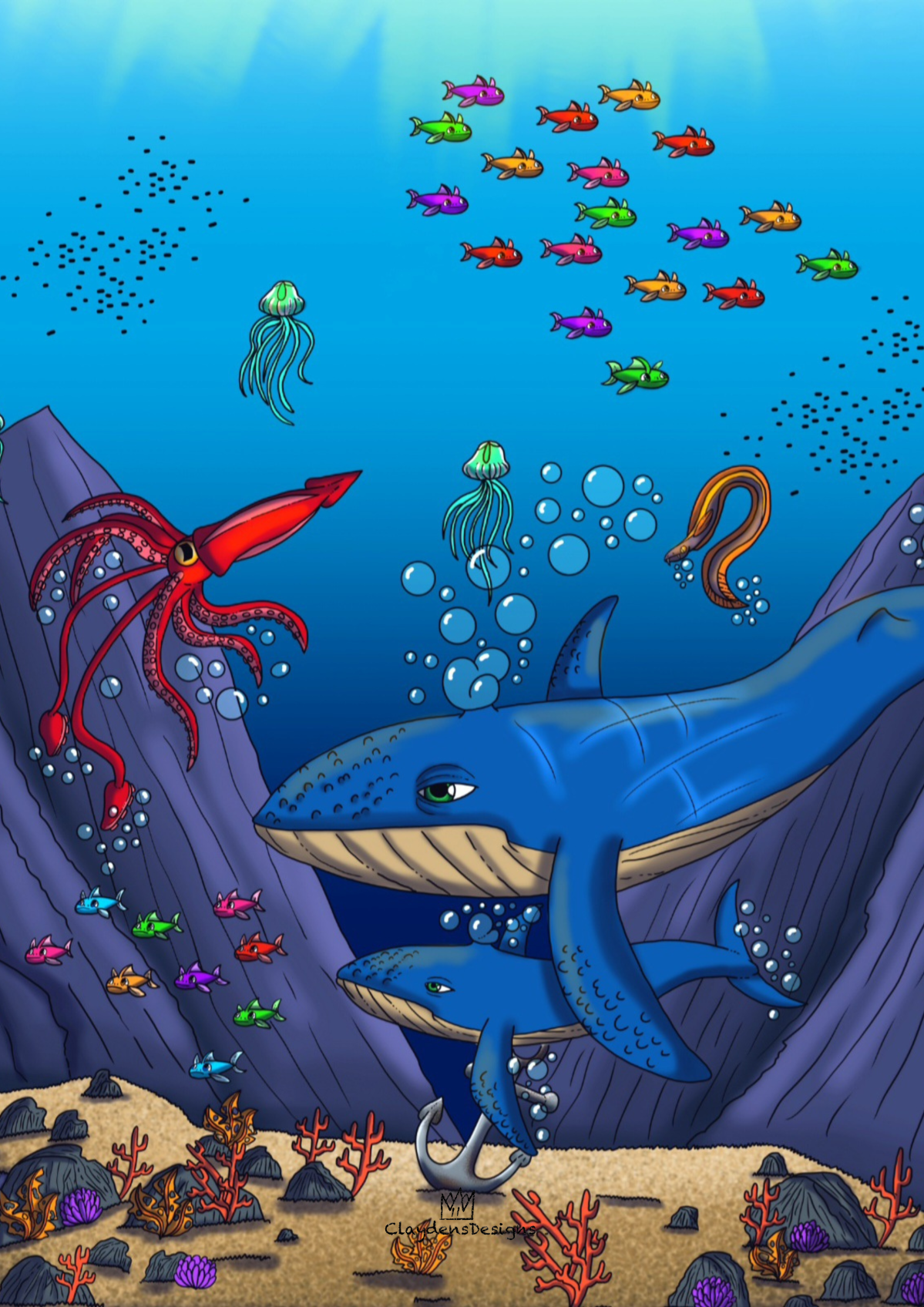
Artwork by Clayden Botes
By: Advika Gupta, 14, India/UAE
Growing up in Mumbai, the Arabian Sea was more than just a backdrop to my life; it was a part of who I was. Family outings to Juhu Beach, school trips exploring coastal biodiversity—it all ingrained in me a deep love for the ocean. But in 2021, that love took on a new urgency. The severe floods that year, which turned the lively streets of Mumbai into rivers, made me realize just how vulnerable our oceans—and by extension, our cities—are to the impacts of climate change. The relentless rain and rising sea levels left us feeling helpless as our home slowly submerged. In that moment, I realized that the ocean’s cry for help wasn’t just something happening far away. It was right here, affecting our lives in ways we could no longer ignore.
Now living in the UAE, I find myself surrounded by a different yet equally fragile marine environment. The crystal-clear waters of the Arabian Gulf have shown me the beauty of marine life but also its peril. I’ve travelled to various places, diving in the coral reefs of the Maldives, witnessing the bleaching of once-vibrant corals, and seeing plastic-choked beaches
in Southeast Asia. Each experience has deepened my resolve to act. The global scope of the problem is undeniable, but it’s the personal encounters with the degradation of these marine ecosystems that have driven me to take action.
Sustainable Development Goal 14, ‘Life Below Water’, is not just an abstract global objective, it’s a call to action that resonates deeply with me. In the UAE, I’ve joined local conservation groups focused on protecting the marine environment. One initiative that’s particularly close to my heart is our effort to restore seagrass meadows along the UAE coast. Seagrasses are often overlooked, but they play a vital role in maintaining healthy marine ecosystems. They provide habitats for marine life, act as carbon sinks, and protect against coastal erosion. Our team has been working to replant these meadows, and seeing them slowly come back to life has been incredibly rewarding.
I’ve also been advocating for the reduction of single-use plastics, organizing clean-up drives along the coastlines, and engaging with local schools to raise awareness about marine conservation. Seeing young students get involved has been incredibly inspiring. Some might wonder, can actions as simple as refusing a plastic straw or joining a beach cleanup really make a difference? But just as a forest begins with the planting of a single tree, these small, local actions are the seeds that can grow into a global movement, I hope. No effort is too small, and each one contributes to the broader fight to protect our oceans and combat the climate crisis.
As I look forward to the Conference of the Parties to the UN Convention on Biological Diversity in Cali, Colombia, in 2024, I carry with me the stories of these places, the memories of these endangered marine ecosystems, and the hope that our collective efforts can turn the tide. Protecting our oceans is a shared responsibility that transcends borders. It’s about ensuring that future generations can experience the same beauty and wonder that I was fortunate enough to witness as a child in Mumbai and now in the UAE. Do you hear the oceans crying out for help? It’s up to us to answer that call with the urgency and compassion it deserves.
 Harmony Online Journal - Youth Voices on Science, Law and Sustainability