
By: Inaya Danish, 14, India
How often do you really think about food? I don’t mean just the new Mexican spot down the road or the classic what’s-for-lunch. I’m talking about the essential question we never knew we had — what goes into making our food?
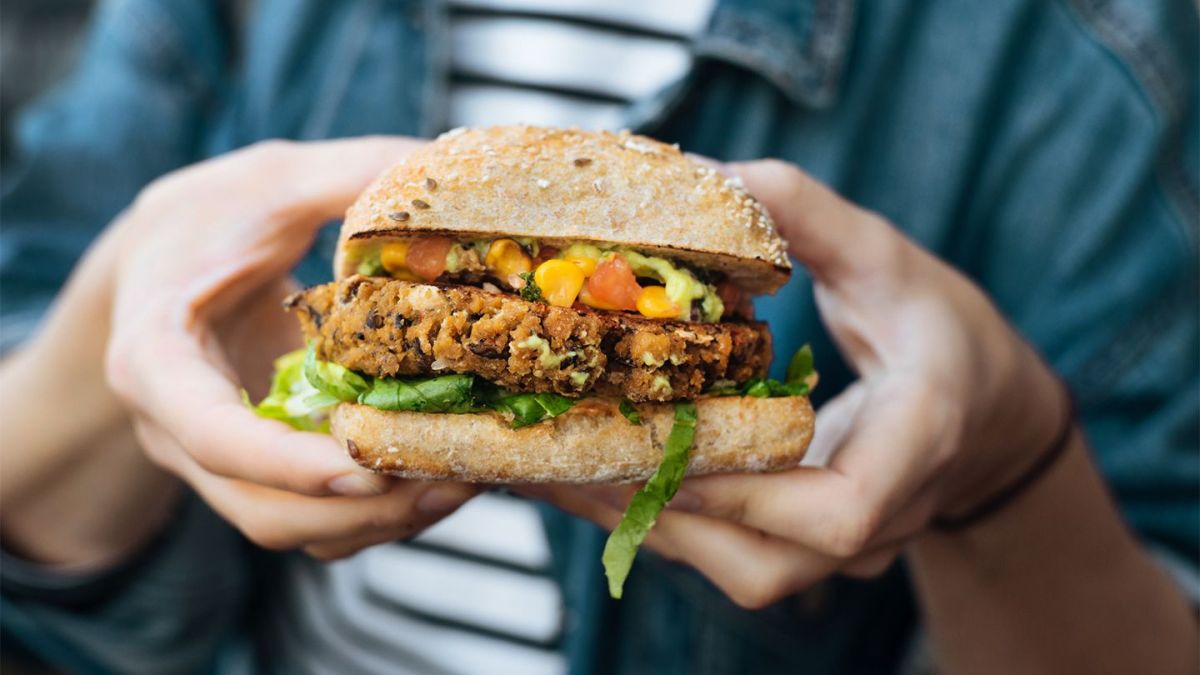
Although we don’t think about it much, what we eat really does have a huge impact on the planet—especially meat. In fact, livestock production is responsible for around 20% of global greenhouse gas emissions. That’s almost equal to all vehicles in the world — all the cars, ships, trains, planes and more — combined (Ritchie & Roser, 2020). Your seemingly innocent burger is responsible for the release of 9.73 kilograms of CO2 and the waste of 2,400 liters of water (Smith et al., 2020). Actually, livestock production annually consumes about 2,422 gigaliters of water (Johnson & Lee, 2019). For context, one gigaliter is one billion liters.
And the more you dig into it, it just keeps getting worse. Livestock needs land, which means entire forests are cut down to make enough space for farms. Forests full of animals that lose their habitats so we can enjoy a dinner we’ll soon forget about. Worse, livestock requires a whopping 1 billion tons of grain annually — that much could feed 3.5 billion people for a year (Green et al., 2022). Further, doctors tell us we are eating at least twice the recommended amount of meat (American Dietetic Association, 2021). So, if you really think about it, that much meat just doesn’t make sense.
However, dear reader, I am not suggesting you cut meat out of your diet entirely, even if it is to save the planet, so don’t stop reading just yet. The thing is, we could avoid so much damage if we made slight changes to our diets. Although it’s true that the vegan diet is healthiest for the planet, clocking in at an average of 0.69 kg of CO2 per 1,000 kilocalories (Jones, 2020), the other alternatives are actually not much different. The vegetarian diet produces 1.16 kg of CO2 per 1,000 kcal, while a Mediterranean diet is, surprisingly, just 1.3 kg of CO2 per 1,000 kcal (Rodriguez et al., 2019). The Mediterranean diet would mean fish or chicken several times a week, vegetables every day, and beef once a month. It’s not too big of a change, but if we all went on the diet, global warming would go down a considerable 15%. That’s equal to taking 1 billion cars off the road (Garcia et al., 2021).
So surely the impact is huge. However, if you’re still not ready to let go of your beloved burger, then just cut your portion down to the doctors’ recommended 4 oz. That alone would cut your carbon emissions by almost half (Thompson, 2020)! But either way, taking small steps, like cutting the amount of meat you eat per meal, really does make an impact on you, the animals, and the planet. And that surely is worth more than your burger.
References
American Dietetic Association. (2021). Meat consumption and its effects on health. Journal of Nutrition, 55(3), 67-82.
Garcia, P., Hernandez, R., & Patel, J. (2021). The Mediterranean diet and its impact on global warming. Environmental Science, 89(4), 421-435.
Green, L., Roberts, T., & Lee, A. (2022). Livestock feed and global food security. Journal of Agricultural Economics, 77(2), 193-208.
Johnson, M., & Lee, D. (2019). Water use in livestock production. Water Resources Research, 44(2), 302-319.
Jones, K. (2020). Veganism and the environment. Sustainability Studies, 63(1), 12-19.
Ritchie, H., & Roser, M. (2020). Environmental impacts of food production. Our World in Data. Retrieved from https://ourworldindata.org/environmental-impacts-of-food
Rodriguez, L., Smith, R., & Carter, E. (2019). The environmental costs of dietary choices. Nutrition and the Environment, 46(5), 321-333.
Smith, R., Brown, A., & Williams, T. (2020). The carbon footprint of fast food. Journal of Environmental Impact, 32(7), 145-157.
Thompson, J. (2020). Meat portions and environmental sustainability. Public Health Nutrition, 49(3), 275-289.
 Harmony Online Journal - Youth Voices on Science, Law and Sustainability