
By Jona David Cordonier-Gehring
Why We Started Asking
Fusion energy generates near-limitless, carbon-free power by recreating the reaction that powers the sun. It sounds like science fiction, but it isn’t: fusion is inching out of the lab and into serious commercial planning right now. The catch is that having the technology is not the same as being allowed to switch it on. Somewhere between the laboratory and the national grid sits a maze of permits, licences, safety regimes and investment rules, and almost none of them were written with fusion in mind.
That gap is what we in the Global Youth Council on Science, Law and Sustainability (GYC) set out to investigate, working with pro bono lawyers coordinated by Advocates for International Development (A4ID), and alongside Energy for the Common Good (ECG), an independent non-profit that works to prepare regulators, policymakers and communities to receive fusion energy when it arrives. Our brief was simple to state and hard to answer: what would it actually take, legally, to help clean energy scale up fast enough to meet Sustainable Development Goal 7 and the promises made under the Paris Agreement, and could the law also start clearing a path for fusion power specifically?
The idea grew out of conversations at COP27 in Sharm El-Sheikh and COP28 in Dubai between young people, CEOs and senior government officials. It builds on our earlier GYC work on financing and advancing the clean energy transition, which modelled where investment in game-changing technologies is heading. Since then it has turned into a comparative legal study spanning twelve countries across four continents, looking at how each one regulates renewable energy today and how ready its legal system is for fusion tomorrow.
This matters to us because the people who decide whether fusion succeeds won’t only be physicists and engineers. They’ll be the lawyers, regulators and civil servants who write the rules a reactor has to operate under, and that’s a field still wide open for a generation about to enter it. Clean energy technology is advancing faster than most people realise, but law moves far more slowly than laboratories do. A wind farm or solar plant can only get built at scale if there’s a legal framework that makes it bankable: permitting rules, grid access, long-term contracts, price guarantees.
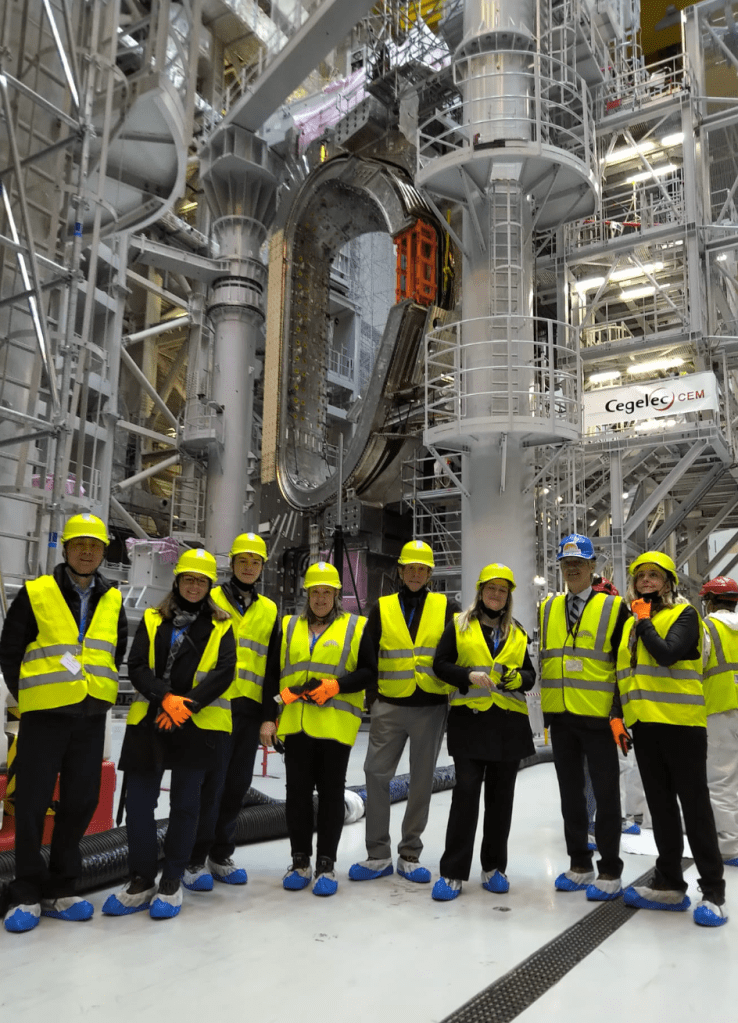
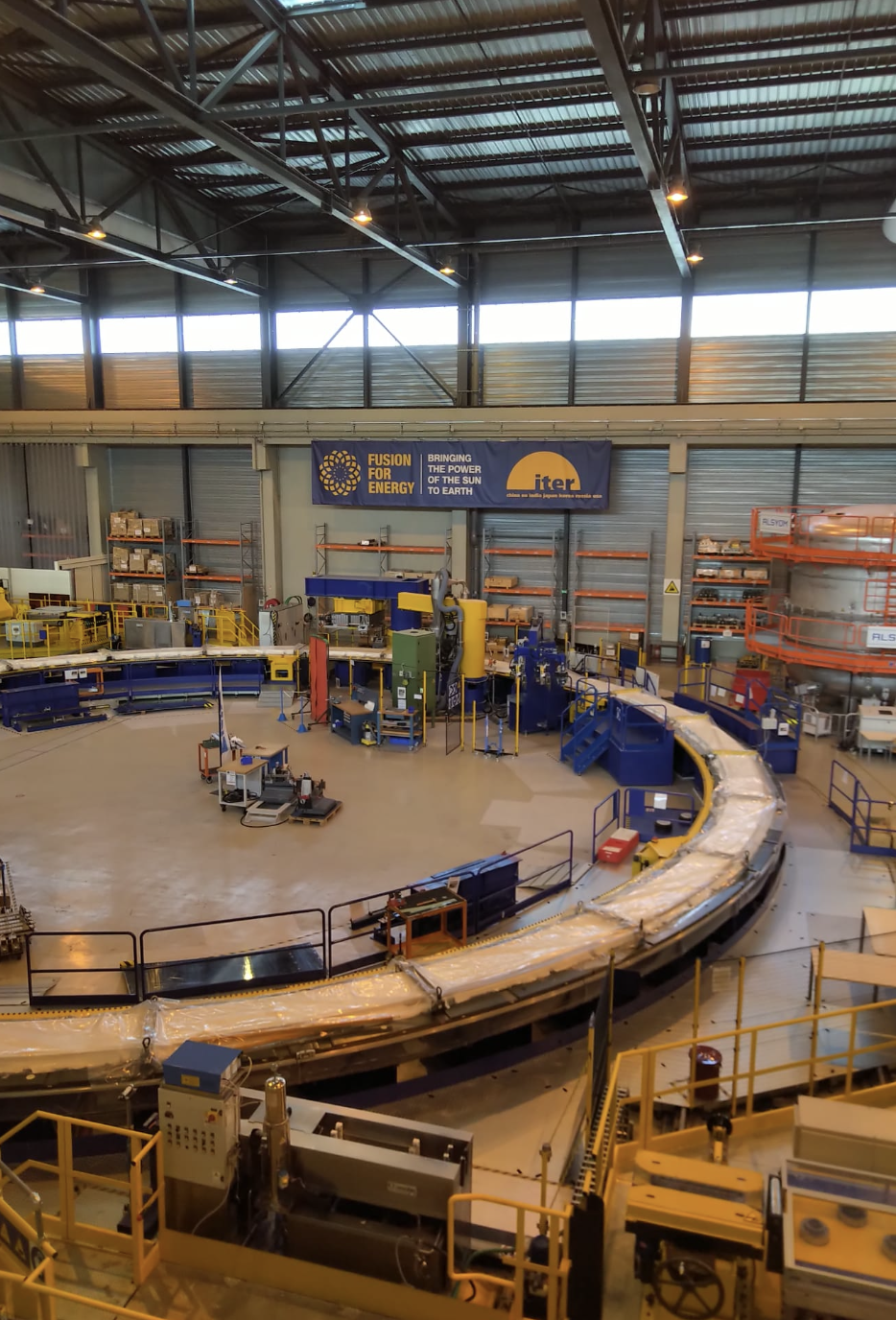
Fusion, dismissed for decades as perpetually “twenty years away,” is edging closer to reality thanks to progress at places like the Princeton Plasma Physics Laboratory, MIT’s Commonwealth Fusion programme, the ITER collaboration in France, and the UK’s Culham Campus. Almost no country has written laws that even mention fusion, let alone laws designed to help it succeed. That gap became a rallying point at COP26 in Glasgow, where young people, energy regulators, clean energy advocates, and fusion scientists and start-ups all made the same point: unless legal and regulatory systems catch up now, fusion risks arriving in the lab years before it’s allowed anywhere near the grid.

Latin America: Ambition Alongside a Clear Legal Gap
Chile’s Non-Conventional Renewable Energy Law forces electricity companies to source a rising share of their power from renewables, a quota that climbed from 5% to 10% between 2010 and 2024. That sits alongside a 2022 climate law locking in carbon neutrality by 2050, and two newer laws that build transmission lines ahead of demand and let battery storage plug into the market and get paid like any other generator. Chile also sits on some of the world’s largest lithium reserves, a resource relevant to certain fusion fuel cycles, and hosted the First Inter-American Conference on Science and Technology of Nuclear Fusion in August 2025. But the researcher behind Chile’s report points to a real gap: solar and wind have detailed legal routes to sell electricity into the grid, and fusion has none.
Uruguay shows what’s possible when energy policy survives changes of government. A national energy policy running from 2005 to 2030, backed by every major political party, underpinned 20 to 30 year contracts with the state utility UTE that made wind, solar and biomass bankable even in a market of only 3.4 million people. A 1997 law banning nuclear power generation outright would currently make fusion illegal too, so that law would need to change first.
Costa Rica already draws 98% of its electricity from renewables, through a state-led model built around its national utility ICE and a 1990s law letting private companies build and sell power into the grid, though 70% of the country’s total energy use, mostly transport, still runs on imported fossil fuel. The Costa Rica Institute of Technology ran the first plasma discharge in a stellarator anywhere in Latin America back in 2016, and its life-sciences and advanced-manufacturing industry could plausibly host the kind of high-tech supply chain fusion would need.
Africa: Sophisticated Tools Built for Very Different Starting Points
Kenya has perhaps the most transferable regulatory toolkit of the twelve countries we studied. Its Energy Act created both a regulator, the Energy and Petroleum Regulatory Authority, and a state company, the Geothermal Development Company, whose whole job is to absorb the expensive, risky early-stage drilling so private developers only step in once a resource is proven. That model delivered Olkaria VI, an $870 million, 500 MW geothermal complex now supplying power to over 1.2 million households, and it sits alongside the 20-year fixed-price contract underpinning the Lake Turkana Wind Power project, Africa’s largest wind farm. Kenya is also building an entirely new legal framework for nuclear power right now, having announced plans in March 2026 to start building a 2,000 MW nuclear plant in Siaya County by 2027. The licensing and institutional structures being written for that plant could, with foresight, be shaped to fit fusion later on too.
Morocco built its solar giant Noor Ouarzazate, 580 MW and enough to power roughly 1.3 million homes, through a single state agency, MASEN, created in 2009 specifically to coordinate financing, permitting and construction in one place. Morocco has told the IAEA it wants to help the whole African continent build fusion capacity, though it has no fusion-specific rules yet, and its chronic water stress could complicate cooling for any future fusion plant.
Tanzania’s study is a useful reality check. Only around 40% of the population currently has reliable electricity access, and its National Energy Compact calls for $12.9 billion in investment just to lift the renewable share of generation to 75% by 2030. In that context fusion is a distant aspiration, though state interest in nuclear science through the Tanzania Atomic Energy Commission is growing.
Europe: Strong Institutions Meeting Shifting Public Opinion
Denmark’s Act on the Promotion of Renewable Energy gives the country a single rulebook: one agency, the Danish Energy Agency, handles permitting and picks offshore wind sites centrally, while legally guaranteed compensation schemes for nearby communities help keep public support. That model made Denmark a world leader in offshore wind, but it has a weak point too. Local objections have already killed at least one major project outright, the Vallø Energy Park, cancelled in 2025 after resident protests, and a technology as unfamiliar as fusion could face the same resistance unless it’s sited with national authority rather than local veto power. Danish opinion on nuclear power has also shifted fast: a 2022 poll found only 39% in favour of nuclear energy, but by January 2026 that had become 55% in favour of ending Denmark’s nuclear ban altogether. If fusion is clearly explained as distinct from fission, it might land more easily in Denmark than recent history would suggest.
Sweden backs its renewable rollout, including Markbygden, Europe’s largest onshore wind farm at 2 GW, with a market-based green certificate trading scheme and a Climate Act requiring annual government reporting. It already has a dedicated nuclear and radiation regulator, the Swedish Radiation Safety Authority, which is exactly the kind of institutional capacity a future fusion industry would need to lean on rather than build from scratch.
Japan: The One Country Writing Fusion Rules
Japan stands apart from every other country we studied, because it is the only one actually writing rules for fusion specifically rather than waiting to adapt renewable-energy law later. In April 2023 the government adopted a national Fusion Energy Innovation Strategy, and when it revised that strategy in June 2025 it moved the target date for demonstrating fusion electricity generation from “around 2050” to sometime in the 2030s. A private industry body, the Japan Fusion Energy Council or J-Fusion, was set up in March 2024 to work alongside government on supply chains and technology roadmaps.
The trickiest legal question Japan has run into is classification. Fusion reactions count as “nuclear energy” under the Atomic Energy Basic Act, but the tritium fuel used in a fusion device doesn’t count as “nuclear fuel material,” so fusion devices don’t legally count as nuclear reactors either. That puts them under a lighter radiation-safety law instead of the much stricter reactor law that governs fission plants, which means none of the usual earthquake safety checks or emergency response planning currently apply. Japan’s Nuclear Regulation Authority is working out a proper bespoke framework now, with a target of resolving the question by the end of fiscal year 2026.
On the money side, the government funds early fusion research directly through grants. One Japanese fusion company, Kyoto Fusioneering, received roughly ¥499 million for gyrotron research, and a start-up support scheme has backed several more fusion companies through 2027. Private investors have also started writing bigger cheques: Kyoto Fusioneering raised roughly ¥9.3 billion in one funding round. Ordinary bank project finance isn’t available yet, because lenders need a proven technology with a track record before they’ll underwrite it. Public opinion in Japan is shaped heavily by attitudes to nuclear fission, where more than half of people surveyed still call the technology dangerous, but fusion is increasingly being treated as a different question because it doesn’t produce the same high-level radioactive waste and carries a much lower risk of a serious accident.
Asia-Pacific: Legal Vacuums and Constitutional Puzzles
Vietnam used one powerful legal tool, a 2017 government decision guaranteeing a fixed price and requiring the state utility EVN to buy every unit of qualifying solar power, to turn solar from a marginal technology into a mainstream one almost overnight. It has since done something similar for wind through its national power plan. But Vietnam suspended its own nuclear power programme in 2016 over cost and safety concerns, and that leaves fusion sitting in a real legal vacuum today. There’s a genuine risk that the public and regulators will lump it in with fission unless it’s introduced carefully, possibly by avoiding the word “nuclear” in early legislation altogether.
Palau offers the single most interesting legal puzzle in our whole project. A section of its constitution, written in response to decades of US nuclear weapons testing nearby in the Pacific, bans harmful substances intended for use in warfare and nuclear power plants from its territory without a three-quarters referendum vote. Lawyers studying that clause disagree on whether it bans nuclear power plants outright or only nuclear weapons, and the ambiguity is serious enough that a former Palauan president has suggested the current one, Surangel Whipps Jr., could face impeachment simply for advocating publicly for nuclear energy. Palau’s actual energy law, a 2016 Energy Act and a 2009 Net Metering Act, is built entirely around rooftop solar and battery storage for its scattered islands, with no nuclear framework of any kind.
What We Found
Across every region, a pattern keeps repeating. Countries that have already built strong legal tools for renewables, whether that’s de-risking state agencies, long-term contracts, or single-point permitting authorities, are best placed to adapt those same tools for fusion, and Japan’s experience shows just how much specialised legal work is still needed even once a government commits to trying. The main thing missing almost everywhere else is a fusion-specific legal identity, distinct from existing nuclear fission law, so fusion isn’t automatically caught up in rules, or public fears, designed for a completely different technology.
Taken together, these findings point to one conclusion: the legal groundwork for a global fusion industry needs to start now, not once the first commercial reactors are built.
What Happens Next
The next step is opening up an international conversation between regulators, lawyers, scientists, and young people about which of these regulatory tools could be adapted, borrowed, or built from scratch to support fusion’s arrival responsibly. The GYC, A4ID and ECG team will bring these findings to a dedicated panel at Climate Law and Governance Day at COP31 in Antalya, Türkiye, continuing the conversation that began at COP26 and COP28 and pushing fusion further up the agenda of international climate law and governance.
If you are a student thinking about energy law, regulation or plasma physics, this is a field searching for fascinated future-oriented new leaders. The rules that will govern the first commercial fusion plants have mostly not been written yet, and many who will write them – and who will be harnessing and counting these stars – are like us, still in school.
This study was carried out by the Global Youth Council on Science, Law and Sustainability, with pro bono legal research coordinated by A4ID and in partnership with Energy for the Common Good. Find our other work on SDG 7: Affordable and Clean Energy in the Harmony Journal, and our other member-led projects on the GYC Member Projects page.