Nature-Based Flood Management in Our East Anglia Fens and Water Systems: Intergenerational Insights

Our misty green fenlands of East Anglia are drying up and sinking, as loss and damage due to climate change, nature destruction and flooding is increasing. A century and a half of drainage and questionable water management has left much of Cambridgeshire below sea level, held up only by pumps and ageing banks — and that same drainage is destroying the very peat this rare natural ecosystem, and the people who live in it, depend on.

Our Fenlands Restoration for Flood Defences project, part of GYC-SLS Cllr Nico Cordonier Gehring’s UWC Atlantic Systems Transformation Pathway intervention, is exploring how nature-based solutions like re-wetted fenlands can work alongside other flood defences. We are advocating for green not just grey infrastructure, so that our precious local wetlands and waterways can foster rather than frustrate sustainable water systems governance (SDG 6), promote climate change mitigation, adaptation and resilience (SDG 13) and protect critical habitat for biodiverse species (SDG 15).

Over the past months we have consulted scientists, community groups and drainage boards, created new educational materials and a homepage, run workshops in local rural and urban schools to pilot the materials, edited a Heron Habitat Helpers Handbook for local children and families and a special SDG 6 clean water issue of our Harmony youth online journal, and spoken up for future generations in local and global water and wetlands events. We also advocated for the rights of the River Cam, in a special community festival on 21 June 2026, and celebrated the Cambridge City Council’s recent historic resolution to recognise the river’s rights.
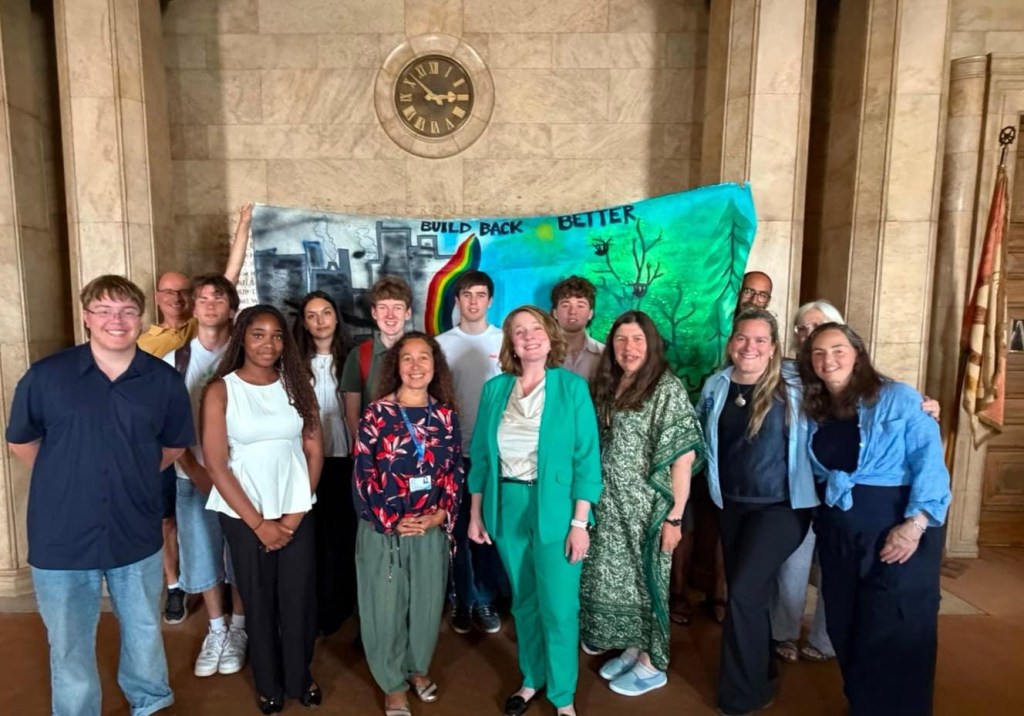
Participants standing together in the Guildhall foyer in front of a hand-painted banner reading Build Back Better
Participants at the Intergenerational Roundtable, Cambridge City Council Guildhall, 22 July 2026.

Making the invisible visible

Teaching the fens is harder than it sounds, because the fens do not look like a crisis. They look like flat, productive farmland. As Nico explains, that is precisely the problem — the peat is subsiding by centimetres a year, invisibly, and the flood defence conversation is still framed as a choice between concrete and doing nothing. So our workshop decks for Years 5–8 and Years 9–13 have been rebuilt to make the invisible visible: feedback loops, the iceberg model, and a sponge experiment that lets a nine-year-old feel the difference between saturated peat and drained peat in their hands. The Heron Habitat Helpers Handbook takes the next step, converting understanding into something a child can actually do — a pond to build, herons to tally, compost to buy peat-free. All of it is being prepared for a dedicated GYC homepage, so that any teacher in the region can pick it up and run it without us in the room.
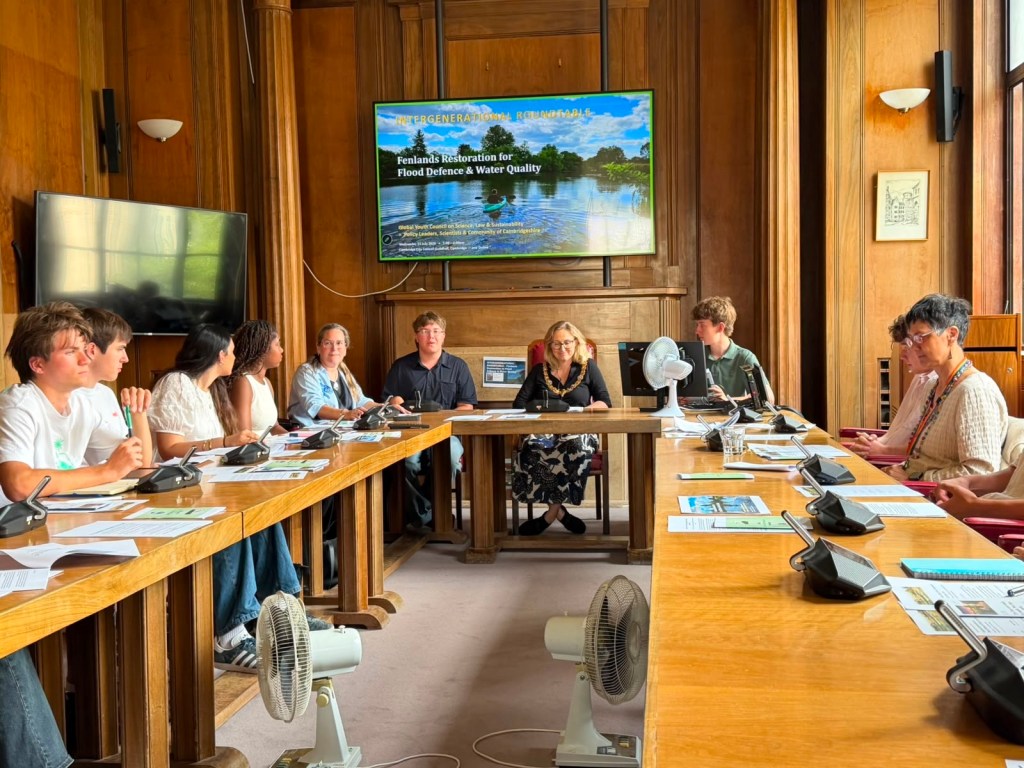
Young people and councillors seated around the wood-panelled council chamber table with microphones, beneath a screen reading Intergenerational Roundtable: Fenlands Restoration for Flood Defence and Water Quality
The Intergenerational Roundtable in session at the Cambridge City Council Guildhall.

Young people have been sharpening these materials rather than simply receiving them, and their critique has been sharper than our own. As Jeremi highlights, materials that explain the problem without offering agency risk leaving children anxious rather than equipped — the emergency framing has to arrive alongside something to do about it. As Katie and Graeme note, the fenlands natural land and waterscapes are priceless, but urban-rural splits may matter: a pupil in a Cambridge classroom, a pupil in a flooded Peterborough development, and a pupil in a village where the family farm pays a drainage board levy come to wetlands with entirely different starting assumptions, and one set of slides cannot serve all without acknowledging that. As County Cllr Ros Hathorn observes, there is something genuinely heartening in seeing young people from right across the county — cities, market towns and villages alike — choosing to work together on this, and in the clarity of their commitment to protecting nature and the local ecosystems they have grown up in.
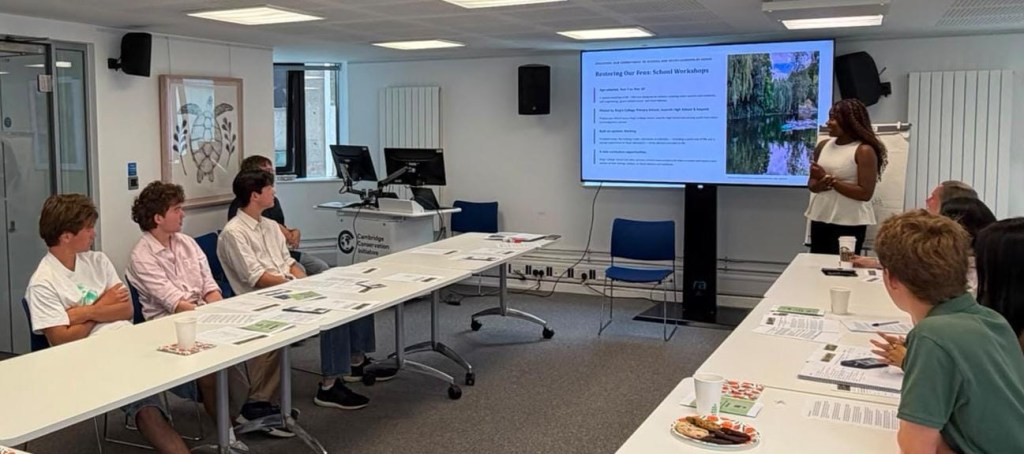
A young person presenting a slide titled Restoring Our Fens: School Workshops to participants seated around tables at the working session
Presenting the schools workshop programme for review at the Youth Working Session.

That commitment needs somewhere to go, though. As Sophia proposes, with Nico, Jeremi, Ethan, Saskia, Thomas, Joseph, Katie, Carla and Ras among others fully supporting, what the fens now need is a standing Fenlands Youth Advisory Commission, so that young people are built into the consultation and planning processes as a matter of course, rather than invited to speak once and thanked. Alongside the teaching materials, we are building the case outwards — pursuing Ramsar Wetlands City accreditation for Cambridge and Peterborough, a status no city in the East of England yet holds, and editing a special SDG 6 clean water issue of our Harmony youth journal that tells the story of the fens to young readers well beyond them.

What it will actually take to shift the system

Our declaration makes a specific claim: that flood and water management is a system, not a single line of defence, and that wetlands and floodplains are green infrastructure — not a soft alternative to real defence, but a working part of it. Every hectare of reconnected floodplain is a hectare of burden lifted from engineered assets that cannot easily be replaced. Our petition turns that into five asks of the Internal Drainage Board, water authorities and the Fens 2100+ programme: restore and create wetlands, adopt soft engineering alongside hard infrastructure, recognise wetland habitats as part of the flood defence system, reduce long-term pressure on ageing assets, and listen to the community. As underscored by the Mayor of Cambridge, Hon Maria Cleminson, none of this is a demand to dismantle the infrastructure that keeps homes and farms viable — it is a demand that the infrastructure stop being asked to carry the load alone. As Prof Marie-Claire Cordonier Segger emphasises, Ramsar Wetlands City accreditation would give that argument real institutional weight: an internationally recognised standard, held by no city in the East of England, that binds urban planning to the health of the wetlands surrounding it and makes the commitment far harder to quietly drop.
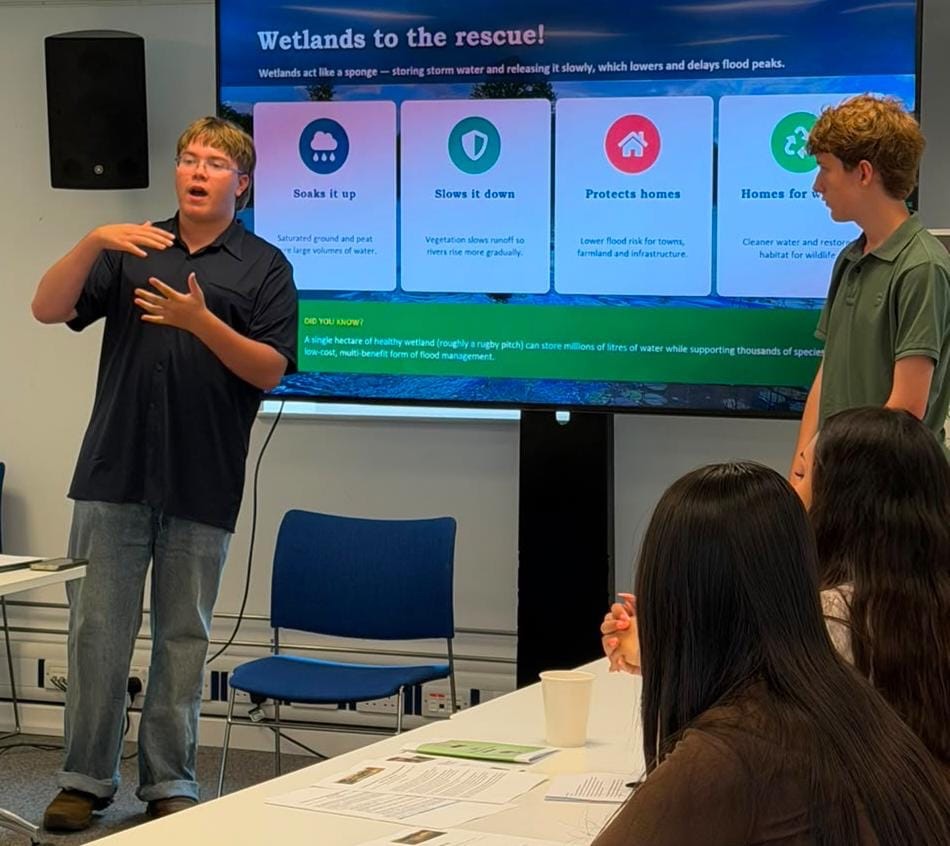
A young person explaining a slide headed Wetlands to the rescue, showing how wetlands soak up and slow floodwater, protect homes and provide habitat
Explaining how re-wetted fenland stores and slows floodwater.

The harder question is not whether wetlands work, but why that knowledge is not moving resources including financing. Where are the political and legal openings for fen restoration to be treated as flood infrastructure rather than conservation? What would it take for wetland restoration to compete with concrete when funding decisions are made? Farming, water quality, development and flood risk pull in different directions — who resolves that, and at what level? What is the single biggest regulatory obstacle to large-scale rewetting, and could the River Cam’s newly recognised rights be made to do real work?

As Cllr Dr Antoinette Nestor observes, the constraints here are practical rather than ideological: appraisal rules, land tenure, and the question of who holds the pen. As Cllr Katie Thornburrow stresses, that is exactly why these voices have to be heard at every level at once — city, county, drainage board and national programme — because a case made convincingly in one forum can still fall silently at the next. That is a more tractable problem than disagreement — and a reason to keep pressing. Cllr Cheney Payne and Cllr Olaf Hauk underline the importance of this work, and Cllr Naomi Bennett calls for urgency as the crisis worsens. Our declaration has been strengthened accordingly, and now closes with a commitment we made to ourselves as much as to anyone else: that as the young people of today, we recognise the impact we and future generations will have on water supply, use and quality, and we undertake to mitigate the impact we as humans have on water as part of the ecosystem. The petition is now going out as widely as we can carry it. The Mayor of Cambridge Hon Maria Cleminson and Cllr Dr Antoinette Nestor have already signed.

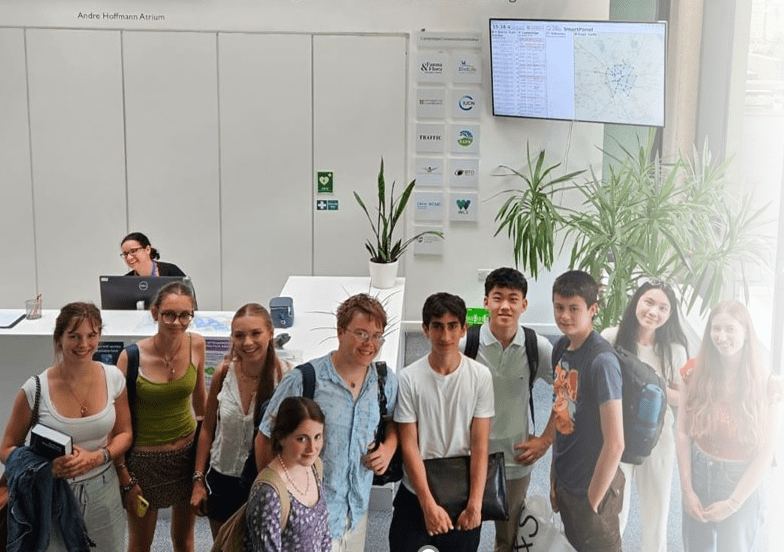
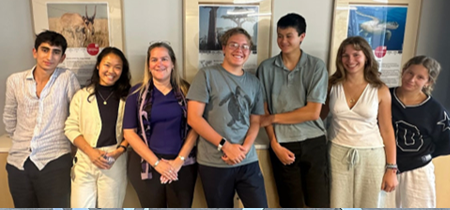
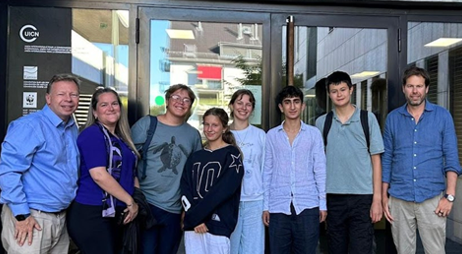
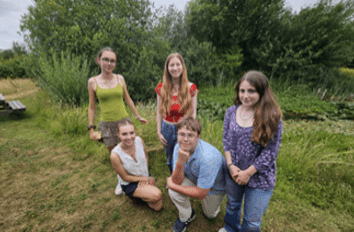
Our warmest thanks to everyone who took part in the Youth Working Session: Reviewing Our Educational Materials, Declaration & Petition, held at the David Attenborough Building on Wednesday 22 July 2026 — and in particular to the young people who travelled in from across Cambridgeshire, including Peterborough, Cambridge and the surrounding villages, whose scrutiny made the materials better. Our thanks also to everyone who contributed to the Intergenerational Roundtable at the City Council Guildhall that afternoon — the councillors, experts and scientists, community leaders, and above all the young people, whose voices were most definitely heard.
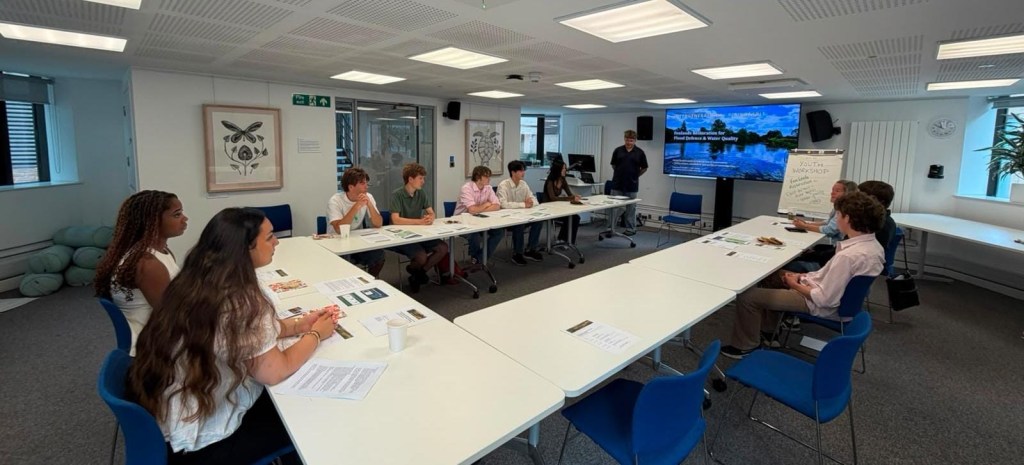
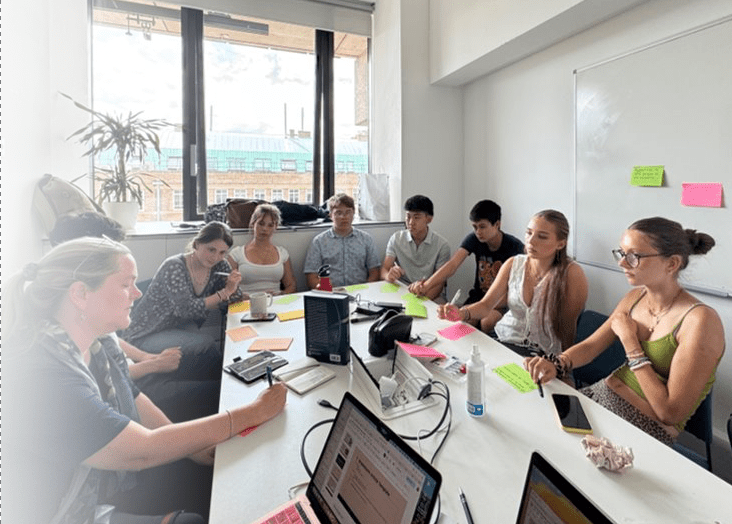
Participants seated around a large open square of tables in a meeting room, with a presentation screen reading Fenlands Restoration for Flood Defence and Water Quality and a flip chart headed Youth Workshop
The Youth Working Session at the David Attenborough Building, 22 July 2026.

Add your name, and share the opportunity to be a voice for future generations with others.

Restoring Our Fens as Flood and Climate Defenses: Have Your Say

The misty green fenlands are sinking, as loss and damage due to flooding is increasing. A century and a half of drainage and questionable water management has left much of Cambridgeshire below sea level, held up only by pumps and ageing banks — and that same drainage is destroying the very peat this rare natural ecosystem and its peoples depend on.

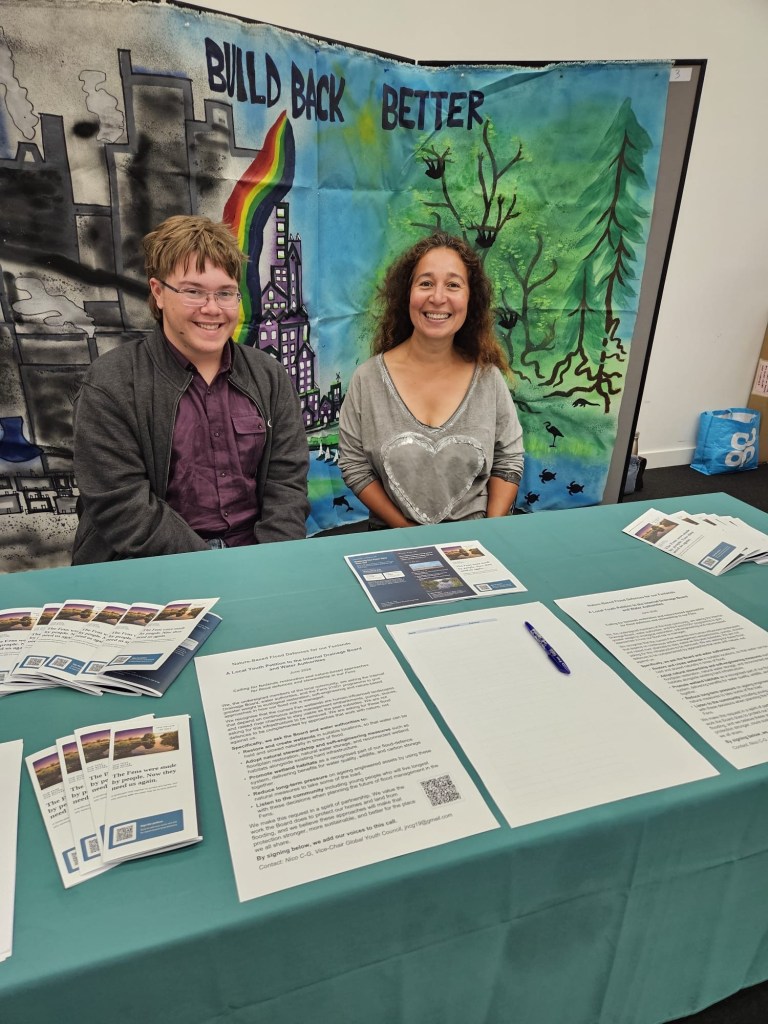
Mayor Maria Cleminson with Cllr Dr Antoinette Nestor, Cllr Nico Cordonier Gehring and Prof Marie-Claire Cordonier Segger at the Cambridge Zero Community Day “Fenlands Restoration for Flood Defences” stall, July 2026.

Our Fenlands Restoration for Flood Defences project, part of GYC-SLS Cllr Nico Cordonier Gehring’s UWC Atlantic Systems Transformation Pathway intervention, is exploring how nature-based solutions like re-wetted fenlands can work alongside other flood defences. They are advocating for green not just grey infrastructure, so that our precious local wetlands and waterways can foster rather than frustrate sustainable water systems governance (SDG 6), promote climate change mitigation, adaptation and resilience (SDG 13) and protect critical habitat for biodiverse species (SDG 15).

We’ve spent the past months consulting scientists, community groups and drainage boards, creating new educational materials and a homepage, running workshops in local rural and urban schools to pilot the materials, editing a Heron Habitat Helpers Handbook for local children and families and a special SDG 6 clean water issue of our Harmony youth online journal, and speaking up for future generations in local and global water and wetlands events. We’ve also advocated for the rights of the River Cam, in a special community festival on 21 June 2026, and celebrated the Cambridge City Council’s recent historic resolution to recognise the river’s rights.

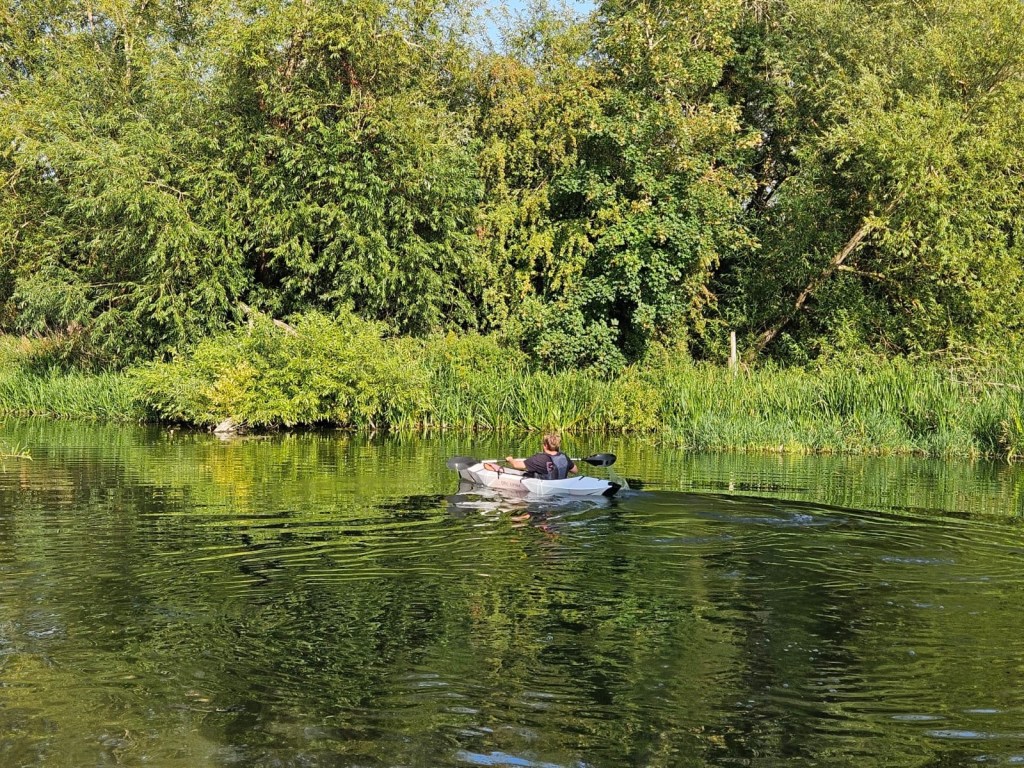
Re-wetted fenlands, part of the Fenlands Restoration for Flood Defences project, Cambridgeshire, July 2026

We’re preparing a flyer, declaration and petition that lays out the case, the trade-offs, and what’s actually at stake for the people and nature who live here in the fenlands, urging our policy leaders to act. The Mayor of Cambridge Hon Maria Cleminson and Cllr Dr Antoinette Nestor have even signed our petition!

The GYC Fenlands petition stall with the flyer and petition laid out for signing.

Now we want to hear from you. Join us on Wednesday 22 July at the David Attenborough Building for a community consultation — a 10am session for young people covering the presentation, our new educational materials and our Habitat Helpers Handbook, and a 1pm intergenerational roundtable open to hear everyone’s insights on the youth declaration and youth/community recommendations, and to identify next steps to convince decision-makers on all levels.

Download the invitation flyer and petition, add your name now at c.org/zFbT9BVbtz, and also share the opportunity to be a voice for future generations with others!

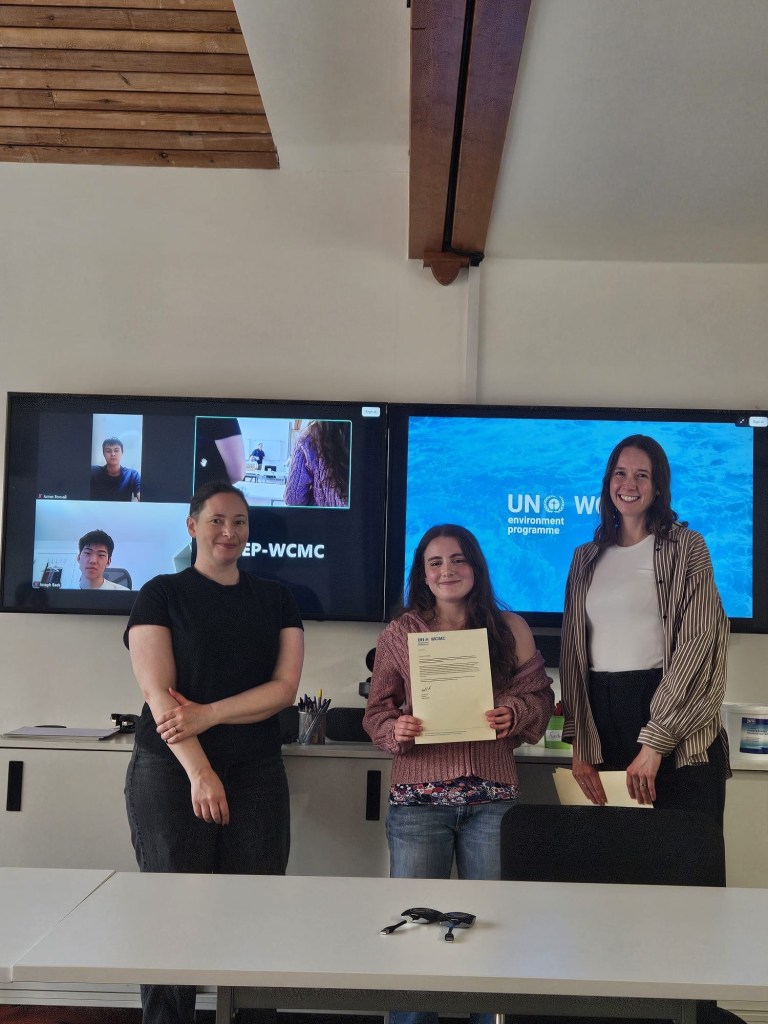
Youth councillors receiving certificates at the UNEP-WCMC centre, Cambridge, April 2026.

By Nico Cordonier Gehring

Whose Decision Is It? Law, Youth and the Delivery of SDGs 6 and 7

At a UN High-Level Political Forum side event, two panels asked complementary questions: what international law can do about shared water and energy resources, and who gets a say in the answer. Rapporteurs Saskia Sudhof and James Bonsall report on sovereignty, scientific evidence, and the case for treating youth participation as a condition of legitimacy rather than a courtesy.

Youth speakers of the Global Youth Council on Science, Law and Sustainability
Youth speakers of the Global Youth Council on Science, Law and Sustainability.

By Saskia Sudhof, Woodside Priory School, Portola Valley, California, and James Bonsall, Winchester College — rapporteurs, Global Youth Council on Science, Law and Sustainability (GYC-SLS)

The world is badly off track on Sustainable Development Goal 6, and more can be done to advance SDG 7 on clean energy. Wetlands — among the planet’s most important ecosystems for water, biodiversity and climate — are disappearing at an alarming rate, driven in large part by a global failure to recognise their importance. On energy, the picture is one of progress outpaced by need: hundreds of millions of people still live without reliable, affordable power, and the clean energy transition is not yet moving quickly or fairly enough to close that gap. The two goals turn, moreover, on a single underlying question — how the world governs natural resources that no state holds alone, from shared river basins to the sun, wind and water on which clean energy itself depends. The people who will live longest with these shortfalls, and inherit whatever is left of the world’s freshwater and energy systems, are also among those least consulted about them.

That gap — between who decides and who inherits the decision — ran through both panels of “Current and Future Law and Policy Leaders for SDGs 6 and 7,” an official side event at the UN High-Level Political Forum in New York. The first panel asked what international law can do about shared natural resources. The second asked who gets a say in the answer.

Part I — Sovereignty, Science and Shared Resources

Speakers of the international law panel at United Nations Headquarters, New York, with copies of Futures 2026, Sustainable Development Law and Futures
Speakers at the “Current and Future Law and Policy Leaders for SDGs 6 and 7” side event, United Nations Headquarters, New York, 7 July 2026.

Natural resources have long been viewed as subject only to national sovereignty. Yet it is increasingly recognised that these resources are essential to common, transboundary concerns such as the Sustainable Development Goals. International law must therefore, as Professor Ilaria Espa (Università della Svizzera italiana) put it, help rather than hinder the sustainable management of natural resources. Many resources of global importance are at risk and cannot be protected by any state acting alone — which requires a rethink of traditional notions of transboundary sovereignty. The panel pointed to the forthcoming International Law Association volume Natural Resources, International Law and Sustainable Development, and to emerging concepts such as custodial sovereignty, under which resources once treated as purely national fall increasingly within cooperative international regimes.

One field where this rethink is required is renewable energy — not only the materials needed to build renewable infrastructure, but the energies being harnessed themselves: the sun that shines on the solar panels, the wind that spins the turbines and, most essentially, the water that drives hydroelectricity. These are themselves natural resources; but without sufficient knowledge of them — a lack of detailed wind maps, for example — it is impossible to develop wind energy at all. The sustainable management of those resources, in the form of renewable energy sources, is essential to delivering SDG 7.

Water has played a vital role throughout human history in defining boundaries and borders by presenting obstacles. Yet this very trait makes it difficult to define who should have responsibility for managing it. International law has been successful here not through direct agreements, but through procedural innovations that help states jointly identify problems in the first place: coordinating international scientific scans and commissioning relatively neutral compilations of data. This matters because, rather than treating scientific uncertainty as a barrier to cooperation, the ILA guidelines support the development of a joint, neutral evidentiary record before negotiations begin — reducing early-stage disputes by depoliticising the facts.

Part II — Whose Decision Is It?

Youth panel on SDGs 6 and 7, UN High-Level Political Forum side event
The youth panel on SDGs 6 and 7.

If law is learning to widen the circle of who is responsible for a resource, the second panel pressed a harder question: who is in the room when the decision is made. Young people hold a UN-recognised right to participate in environmental decision-making, and, as youth sustainability advocate and GYC-SLS Vice-Chair Nico Cordonier Gehring argues, a system that makes decisions about a group without taking input from that group is one carrying a “design flaw.” Correcting that flaw is not a matter of courtesy. It goes to whether decisions about water and energy can claim legitimacy at all.

The urgency on water is difficult to overstate. Freshwater is vanishing far faster than it can be replenished. As GYC-SLS Councillor Eliana Strömberg explains, citing UN figures, over half of the world’s lakes and reservoirs are dwindling, more than forty per cent of water bodies are severely polluted, and groundwater is being pumped from aquifers faster than rain and snow can restore it. A generation that will inherit this crisis, she argues, must be given genuine opportunities to shape water conservation at every level — from municipal consultations to youth-led publications, and from local catchments to international negotiations.

The same logic runs through SDG 7. Reliable, affordable, clean energy, GYC-SLS Councillor Kourosh Moghadam observes, is the ground on which the rights to health, education and livelihood stand. But the transition to clean energy carries its own risk of injustice. A transition that leaves the poorest behind is not improvement; it is, in his words, merely “moving the injustice around.” Here too, youth voices are not a decorative addition but a condition of reaching the goals at all.

Taking that seriously means widening the circle of who governs water and energy. It means integrating Indigenous knowledge into water and energy governance rather than treating it as a supplement to expert decision-making. It means the meaningful inclusion of women, youth and persons with disabilities. And, increasingly, it means treating the cybersecurity of digitalised water and energy infrastructure not as a technical afterthought but as integral to sustainable development law itself.

The two halves of the event meet here. The procedural innovations described in the first panel — joint scientific scans, neutral evidentiary records, cooperative regimes over shared resources — are precisely the mechanisms into which young people are asking to be admitted. A neutral evidentiary record is only as legitimate as the range of people who helped assemble it.

Where Young People Are Already Doing This Work

There are already channels through which this is happening. The GYC-SLS is editing two special issues of its Harmony Online Journal — one on SDG 6 and one on SDG 7 — inviting articles and art from youth worldwide, and its Futures anthology continues to collect short stories from young authors globally. The Council’s youth-led campaign on other effective area-based conservation measures (OECMs) will be presented at the meetings of the UN Convention on Biological Diversity in Yerevan this autumn, and an online celebration of Indigenous children’s voices is planned for 25 July.

What ties these threads together is a single demand: that decision-makers move beyond token consultation and engage young people with “inclusion, serious consideration, and accountability.” On present trends, SDGs 6 and 7 will not be delivered by the institutions that set them. Whether they are delivered at all may depend on whether the generation inheriting the shortfall is finally treated as a partner in the decisions rather than their subject.


Thanks are due to the hosts, chairs, speakers and rapporteurs of “Current and Future Law and Policy Leaders for SDGs 6 and 7,” an official side event held at United Nations Headquarters in New York on 7 July 2026 during the UN High-Level Political Forum on Sustainable Development, which was the inspiration for this piece. The event was co-hosted by the Centre for International Sustainable Development Law, the International Law Association and the Global Youth Council on Science, Law and Sustainability, with speakers Professor Maya Prabhu (Yale University), Professor Ilaria Espa (Università della Svizzera italiana), Professor Markus Gehring (University of Cambridge), Dr Tejas Rao (International Law Association’s Committee on International Law and the Sustainable Development Goals), Professor Marie-Claire Cordonier Segger (CISDL and University of Cambridge), advocate Maria Jose Alarcon (Global Youth Council), Nico Cordonier Gehring (UWC Atlantic), Eliana Strömberg (International School of Lund) and Kourosh Moghadam (Winchester College), and rapporteurs James Bonsall (Winchester College) and Saskia Sudhof (Woodside Priory School).

From the Mountains to the Classroom: Eliana’s Story

Meet Eliana Ituarte Strömberg, a 16-year-old contributor to the Global Youth Council who hiked glaciers in Sweden, crowdfunded for climate education, and presented her experiences to Lund Municipality — all while attending school.

Youth Sustainability Science and Policy Internship Programme | Intern Spotlight


Meet Eliana Ituarte Strömberg — a 16-year-old student at the International School of Lund, Sweden, with roots in both Sweden and Mexico. Her bicultural background has shaped a deep curiosity about how different countries can collaborate toward a greener future — a question that led her to write her first article, Scandinavian Success — Too Good to Be True?, and eventually to contribute to the Global Youth Council (GYC).

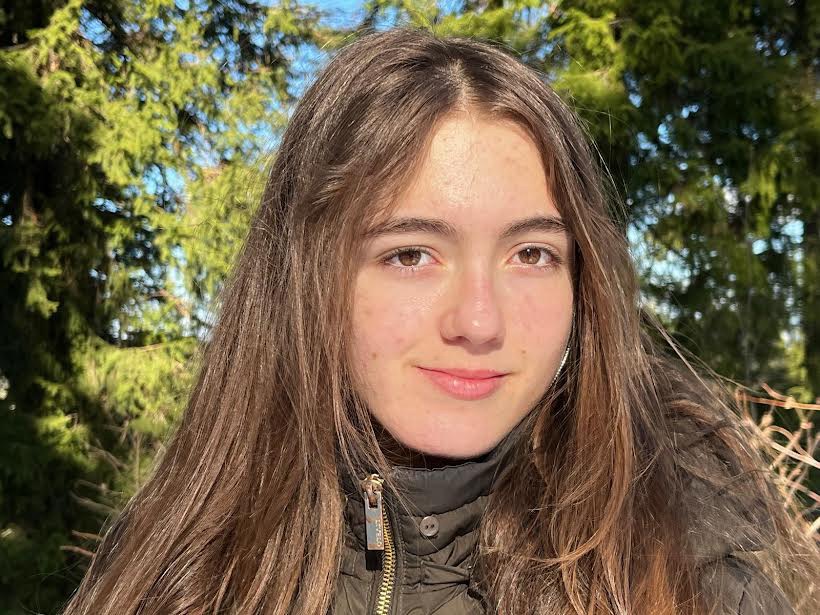
Eliana Ituarte Strömberg

How did you first get involved with the programme?

Earlier this year I had the opportunity to attend a human rights conference in London where I was first introduced to a group of immensely insightful people. I got inspired to create an article for the Global Youth Council about the misconceptions around Scandinavian success. Then later in the year I had a chance to work with them yet again, when they reached out with a project where around 20 youth pledged to paddle, cycle or hike 100 km in total in order to raise money and awareness to support education on climate change and biodiversity loss.


Tell us about the article and crowdfunding work.

For the article, Eliana didn’t stop at her own perspective. She reached out to a biotech engineer, a Colombian lawyer, and a Sri Lankan lawyer to gather views on collaboration between developing and developed countries — a first foray into interviewing that she describes as genuinely eye-opening.

The crowdfunding campaign had a different kind of power:

It was wonderful to be able to combine the hobby of hiking in nature with the pressing issue of saving biodiversity, and it felt like each step taken in the mountains was a step towards our end goal in sustainability.

The process itself, she notes, was more accessible than she expected — setting up a JustGiving page and working with a supporting adult to spread the word. As she puts it, it really goes to show how many people could achieve similar results.


What made hiking the mountains feel meaningful?

The journey allowed me to get a very first-hand experience of the urgency and need for action when walking through glaciers that were in the process of disappearing. We were seeing huge cracks coming straight out of the cores of the glaciers with water gushing out like a wound, showing exactly how vulnerable these giants really are.

It is one thing to read about glacial retreat. It is another to stand inside it.


You also attended a conference in Cambridge. What did that open up?

The conference in Cambridge was really the starting point when it came to what I could later do in collaboration with GYC — it paved the way for the crowdfunding, the article, and the editing.


Skills gained — including an unexpected one.

One of Eliana’s proudest achievements was being invited to present her crowdfunding experience to Lund Municipality, showing other young people how to combine personal hobbies with causes they care about.

This helped me greatly develop my presenting skills and proved to be a great way to inspire others to do the same.


What does this experience say about youth and sustainability?

Because today’s youth are the future leaders, and will live the consequences of past generations, youth involvement is key in bringing change to the world. After experiencing the immense support from strangers when crowdfunding, it showed how much power youth can hold and the difference that can be made in the topics of sustainability and sciences.


Her message to young people thinking of getting involved?

Before starting crowdfunding I expected the process to be very difficult and time consuming. However, after completing the pledge and raising the funds, I understood that the hardest part was starting. So to all the youth who are interested — you would be surprised at the difference you can make. Getting involved will also allow you to meet a large expanse of people who are interested in similar topics.


Eliana Ituarte Strömberg is a contributor to the Global Youth Council and a student at the International School of Lund, Sweden.

Call for Stories & Artwork – Futures 2027

Do you know any creative, articulate youth from ages 8-20 worldwide who might be interested in submitting their creative and inspiring 3-5 page stories to be selected, edited and published?

Would you like to help them win awards and have their work published internationally?

Would you like to empower young people to engage with global sustainability, justice, and the future that we want?

If so, the Center for International Sustainable Development Law is encouraging you to share the following opportunity with young people who want to make a difference in building a sustainable future. 

The Voices of Future Generations Children’s Initiative (VoFG), in partnership with the Global Youth Council on Science, Law and Sustainability, is seeking stories by youth about the future they want, inspired by the Sustainable Development Goals

At this time, young people ages 8-20 and their families or friends, from around the world, are invited to submit short stories (3-5 pages) about fictional characters from their region of the world and any SDGs of interest, along with a 50-word biography, in order to be considered for awards and publication.

The stories should creatively and imaginatively communicate a message about global sustainability, justice and the future we want. Stories with characters and settings that share children’s culture and unique environment or local realities will be preferred. Importantly, the stories should be about the kind of future that young people would like to see (this can include, of course, stories about dystopian futures they don’t want, and how to avoid it).

The top stories will be chosen to feature in the Anthology, with the young writers winning Platinum, Gold or Silver Awards for their work.

Original artwork submissions will also be accepted. The Gold-winning artwork will be chosen as the cover for the Anthology.

This book will be published internationally, raising the voices of future generations and spreading our messages for a fair and sustainable tomorrow among peers and global networks, worldwide. 

An International Commission of leading experts and agencies, together with youth leaders from around the world including VoFG alumni, will select the winning entries.

Eligibility:

(1) Youth ages 8-20 

(2) Open to all countries or communities

Guidelines for story submissions:

(1) format: entries should be 3-5 pages single-spaced, size 12

(2) submissions must include a 50-word biography of the author written in third person (she/he/they). Please refer to the following example from Futures 2026.

(3) stories should be written with sustainability and our future in mind

(4) language: Stories must be submitted in English or accompanied by an English translation if written in another language.

(5) Teachers involving one or more class groups in the contest should limit submissions to 10 entries.

Guidelines for artwork submissions:

(1) artwork must be the original work of the contestant. 

(2) accepted artwork include: paintings, drawings, collages and/or digital illustrations

(3) file formats accepted: jpeg, png & jpg

(4) Photos or scans of physical artwork must be clear and evenly lit. Blurry, too dark, too bright, or otherwise hard to appreciate artwork will not be considered. 

(5) ensure no copyrighted materials are used in the artwork

(6) artwork suspected to be produced by Artificial Intelligence (AI) will not be considered.

(7) contestants can participate in both the story and artwork contests.

How to Apply:

Please submit your entries via our online formsApplications sent via email will not be accepted.

Submit a Story                    Submit artwork

Deadline: June 15, 2026

Criteria for Awards:

The stories will be judged for:

(1) originality,

(2) creative thinking,

(3) link to key messages from the UN Sustainable Development Goals.

(4) specific focus on achieving one to three of the most crucial UN Sustainable Development Goals that addresses the most important problems and solutions special to the young writer’s culture, community or country.

To get a sense of the kind of stories we are looking for, please read previous editions here: Futures 2025 & Futures 2026If you have any questions about the contest, please contact GYC Vice Chair and Futures editor Nico Roman at nico.roman@vofg.org cc’ harmony.online.journal@gmail.com;  ela.martinez@vofg.org

2025 Sustainability Science & Policy Youth Action

Building the Bridge Between Science, Policy, and Youth Action

By Annabel Koven (BSc Candidate, Brown University) and Stella Baek (3rd Year, University of Oxford)

Introduction

What does it look like when sustainability science and policy move beyond lecture halls and into the hands of young people ready to act?

From July to September 2025, we had the privilege of coordinating and mentoring the first-ever pilot Sustainability Science & Policy Internship Programme, jointly delivered through the Centre for Energy, Environment and Natural Resource Governance (CEENRG) at the University of Cambridge and the Global Youth Council on Science, Law and Sustainability (GYC-SLS). Supported by experts from CISDL, IUCN, UNEP-WCMC, WWF, and the UK Environmental Law Association, the programme was designed not simply to teach sustainability—but to practice it.

As early-career scholars working at the intersection of law, science, and governance, we were motivated by a shared belief: youth engagement in sustainability must be rigorous, meaningful, and connected to real policy processes. This pilot programme became our collective experiment in making that vision real.

From Training to Practice: A Youth-Led Model

Over the course of the summer, we worked with a diverse, high-performing cohort of youth leaders. Rather than assigning abstract tasks, we co-designed a series of hands-on, policy-relevant assignments, guiding participants step-by-step through the skills that sustainability professionals actually use.

Under our mentorship, interns collaborated directly with experts and peers to tackle pressing sustainability challenges, such as learning how global environmental governance works not just in theory, but in practice. This meant balancing ambition with precision: learning how to write clearly for policy audiences, how to translate science into public communication, and how to engage communities ethically and effectively.

One of the first assignments invited participants to edit and refine a professional sustainability biography, grounding their academic interests and lived experiences within the broader field of sustainability science and policy. For many, this was the first time they had articulated their role in the sustainability ecosystem, particularly as emerging practitioners rather than students.

Biodiversity, OECMs, and Global Treaties

A central focus of the programme was biodiversity governance, particularly Other Effective Area-based Conservation Measures (OECMs)—an area where science, law, and community engagement intersect in powerful ways. With mentorship from experts at UNEP-WCMC and IUCN, interns developed both technical understanding and public-facing communication skills.

Participants designed and published social-media content to raise awareness of local biodiversity and OECMs, learning how digital platforms can support conservation outcomes when used thoughtfully. These campaigns were not symbolic: they connected global biodiversity frameworks to local realities, demonstrating how youth-led communication can amplify under-recognized conservation efforts.

At the same time, interns built practical skills in treaty analysis and legal writing, engaging directly with international environmental agreements and their local implications. This culminated in a major achievement: interns authored treaty summaries for inclusion in the online companion to Sustainable Development Law: Principles, Practices and Prospects (Oxford University Press, 2025). These contributions were reviewed, accepted, and will be published–marking many participants’ first formal entry into global legal scholarship.

Publishing, Fundraising, and Collective Impact

Beyond research and writing, the programme emphasized the importance of communication, leadership, and financial sustainability. Interns authored articles on their selected treaties for the GYC online journal, serving as senior editors, junior editors, or contributors. Through this process, they learned editorial responsibility, peer review, and collaborative publishing—skills often missing from early sustainability training.

Equally important was learning how to raise awareness and funds responsibly. Participants led social-media and JustGiving campaigns, achieving their pledges in support of GYC-SLS and UNEP-WCMC. These efforts demonstrated that youth engagement can be both values-driven and effective, contributing tangible resources to institutions working on the frontlines of sustainability.

Mentorship as Co-Creation

For us, mentorship was not a top-down exercise. Throughout the programme, we coordinated and facilitated online and hybrid planning, training, and action workshops, adapting the programme in real time based on participant feedback. As this was a pilot, co-development was essential, and the interns rose to the challenge.

What stood out most was the cohort’s collaborative spirit. Participants supported one another across time zones, disciplines, and lived experiences, embodying the kind of global cooperation that sustainability governance demands. Our role was to guide, edit, challenge, and encourage while trusting youth to lead.

Looking Ahead

Being part of the inaugural Sustainability Science & Policy Internship Programme was both a responsibility and an honour. As confirmed by programme leadership, this experience reaffirmed the power of youth-led, expert-supported education to generate real global and local impact.

This pilot was not an endpoint, but just the beginning. We hope it serves as a model for how universities, international organizations, and youth networks can work together to build the next generation of sustainability leaders: grounded in science, fluent in policy, and committed to equity.

To every intern who contributed their time, energy, and ideas–thank you! You reminded us why youth empowerment is not a side project of sustainability work. It is the work.


Annabel Koven & Stella Baek