The misty green fenlands are sinking, as loss and damage due to flooding is increasing. A century and a half of drainage and questionable water management has left much of Cambridgeshire below sea level, held up only by pumps and ageing banks — and that same drainage is destroying the very peat this rare natural ecosystem and its peoples depend on.
Mayor Maria Cleminson with Cllr Dr Antoinette Nestor, Cllr Nico Cordonier Gehring and Prof Marie-Claire Cordonier Segger at the Cambridge Zero Community Day “Fenlands Restoration for Flood Defences” stall, July 2026.
Our Fenlands Restoration for Flood Defences project, part of GYC-SLS Cllr Nico Cordonier Gehring’s UWC Atlantic Systems Transformation Pathway intervention, is exploring how nature-based solutions like re-wetted fenlands can work alongside other flood defences. They are advocating for green not just grey infrastructure, so that our precious local wetlands and waterways can foster rather than frustrate sustainable water systems governance (SDG 6), promote climate change mitigation, adaptation and resilience (SDG 13) and protect critical habitat for biodiverse species (SDG 15).
We’ve spent the past months consulting scientists, community groups and drainage boards, creating new educational materials and a homepage, running workshops in local rural and urban schools to pilot the materials, editing a Heron Habitat Helpers Handbook for local children and families and a special SDG 6 clean water issue of our Harmony youth online journal, and speaking up for future generations in local and global water and wetlands events. We’ve also advocated for the rights of the River Cam, in a special community festival on 21 June 2026, and celebrated the Cambridge City Council’s recent historic resolution to recognise the river’s rights.
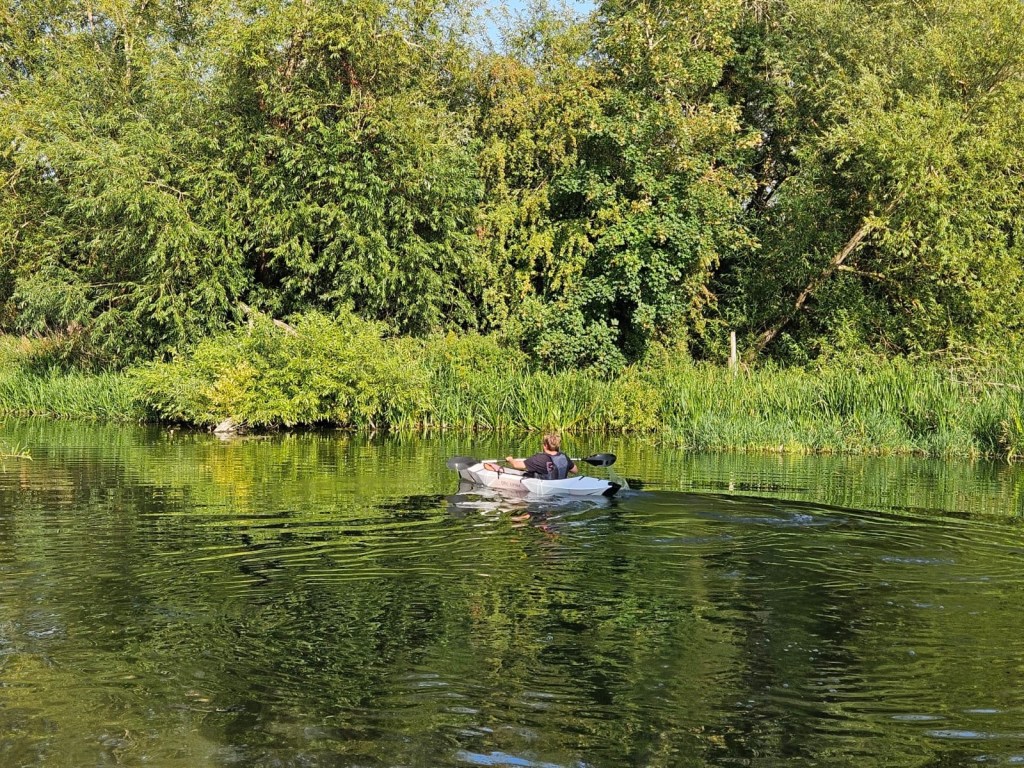
Re-wetted fenlands, part of the Fenlands Restoration for Flood Defences project, Cambridgeshire, July 2026
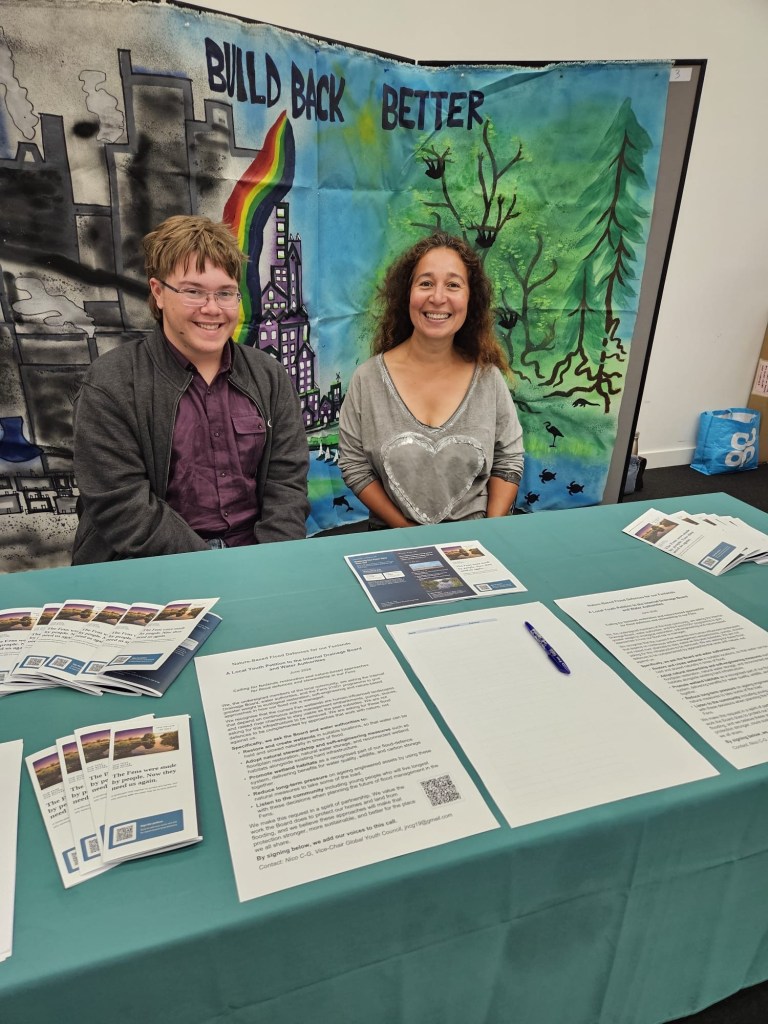
We’re preparing a flyer, declaration and petition that lays out the case, the trade-offs, and what’s actually at stake for the people and nature who live here in the fenlands, urging our policy leaders to act. The Mayor of Cambridge Hon Maria Cleminson and Cllr Dr Antoinette Nestor have even signed our petition!
The GYC Fenlands petition stall with the flyer and petition laid out for signing.
Now we want to hear from you. Join us on Wednesday 22 July at the David Attenborough Building for a community consultation — a 10am session for young people covering the presentation, our new educational materials and our Habitat Helpers Handbook, and a 1pm intergenerational roundtable open to hear everyone’s insights on the youth declaration and youth/community recommendations, and to identify next steps to convince decision-makers on all levels.
Download the invitation flyer and petition, add your name now at c.org/zFbT9BVbtz, and also share the opportunity to be a voice for future generations with others!
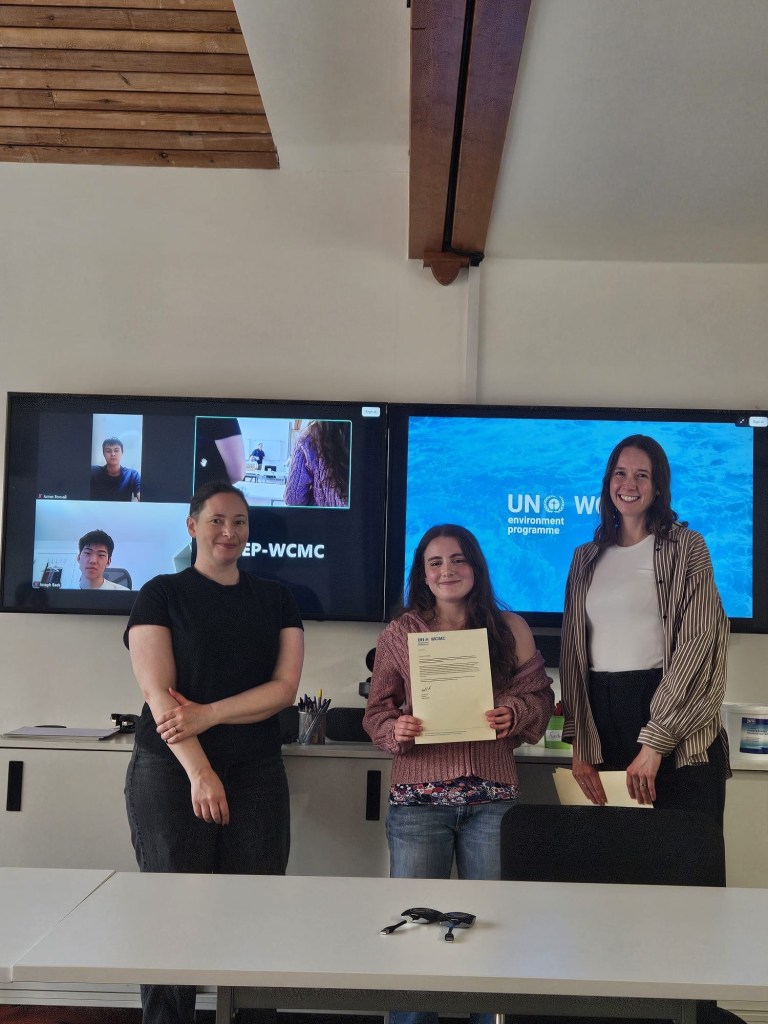
Youth councillors receiving certificates at the UNEP-WCMC centre, Cambridge, April 2026.
At a UN High-Level Political Forum side event, two panels asked complementary questions: what international law can do about shared water and energy resources, and who gets a say in the answer. Rapporteurs Saskia Sudhof and James Bonsall report on sovereignty, scientific evidence, and the case for treating youth participation as a condition of legitimacy rather than a courtesy.
Youth speakers of the Global Youth Council on Science, Law and Sustainability.
The world is badly off track on Sustainable Development Goal 6, and more can be done to advance SDG 7 on clean energy. Wetlands — among the planet’s most important ecosystems for water, biodiversity and climate — are disappearing at an alarming rate, driven in large part by a global failure to recognise their importance. On energy, the picture is one of progress outpaced by need: hundreds of millions of people still live without reliable, affordable power, and the clean energy transition is not yet moving quickly or fairly enough to close that gap. The two goals turn, moreover, on a single underlying question — how the world governs natural resources that no state holds alone, from shared river basins to the sun, wind and water on which clean energy itself depends. The people who will live longest with these shortfalls, and inherit whatever is left of the world’s freshwater and energy systems, are also among those least consulted about them.
That gap — between who decides and who inherits the decision — ran through both panels of “Current and Future Law and Policy Leaders for SDGs 6 and 7,” an official side event at the UN High-Level Political Forum in New York. The first panel asked what international law can do about shared natural resources. The second asked who gets a say in the answer.
Part I — Sovereignty, Science and Shared Resources
Speakers at the “Current and Future Law and Policy Leaders for SDGs 6 and 7” side event, United Nations Headquarters, New York, 7 July 2026.
Natural resources have long been viewed as subject only to national sovereignty. Yet it is increasingly recognised that these resources are essential to common, transboundary concerns such as the Sustainable Development Goals. International law must therefore, as Professor Ilaria Espa (Università della Svizzera italiana) put it, help rather than hinder the sustainable management of natural resources. Many resources of global importance are at risk and cannot be protected by any state acting alone — which requires a rethink of traditional notions of transboundary sovereignty. The panel pointed to the forthcoming International Law Association volume Natural Resources, International Law and Sustainable Development, and to emerging concepts such as custodial sovereignty, under which resources once treated as purely national fall increasingly within cooperative international regimes.
One field where this rethink is required is renewable energy — not only the materials needed to build renewable infrastructure, but the energies being harnessed themselves: the sun that shines on the solar panels, the wind that spins the turbines and, most essentially, the water that drives hydroelectricity. These are themselves natural resources; but without sufficient knowledge of them — a lack of detailed wind maps, for example — it is impossible to develop wind energy at all. The sustainable management of those resources, in the form of renewable energy sources, is essential to delivering SDG 7.
Water has played a vital role throughout human history in defining boundaries and borders by presenting obstacles. Yet this very trait makes it difficult to define who should have responsibility for managing it. International law has been successful here not through direct agreements, but through procedural innovations that help states jointly identify problems in the first place: coordinating international scientific scans and commissioning relatively neutral compilations of data. This matters because, rather than treating scientific uncertainty as a barrier to cooperation, the ILA guidelines support the development of a joint, neutral evidentiary record before negotiations begin — reducing early-stage disputes by depoliticising the facts.
Part II — Whose Decision Is It?
The youth panel on SDGs 6 and 7.
If law is learning to widen the circle of who is responsible for a resource, the second panel pressed a harder question: who is in the room when the decision is made. Young people hold a UN-recognised right to participate in environmental decision-making, and, as youth sustainability advocate and GYC-SLS Vice-Chair Nico Cordonier Gehring argues, a system that makes decisions about a group without taking input from that group is one carrying a “design flaw.” Correcting that flaw is not a matter of courtesy. It goes to whether decisions about water and energy can claim legitimacy at all.
The urgency on water is difficult to overstate. Freshwater is vanishing far faster than it can be replenished. As GYC-SLS Councillor Eliana Strömberg explains, citing UN figures, over half of the world’s lakes and reservoirs are dwindling, more than forty per cent of water bodies are severely polluted, and groundwater is being pumped from aquifers faster than rain and snow can restore it. A generation that will inherit this crisis, she argues, must be given genuine opportunities to shape water conservation at every level — from municipal consultations to youth-led publications, and from local catchments to international negotiations.
The same logic runs through SDG 7. Reliable, affordable, clean energy, GYC-SLS Councillor Kourosh Moghadam observes, is the ground on which the rights to health, education and livelihood stand. But the transition to clean energy carries its own risk of injustice. A transition that leaves the poorest behind is not improvement; it is, in his words, merely “moving the injustice around.” Here too, youth voices are not a decorative addition but a condition of reaching the goals at all.
Taking that seriously means widening the circle of who governs water and energy. It means integrating Indigenous knowledge into water and energy governance rather than treating it as a supplement to expert decision-making. It means the meaningful inclusion of women, youth and persons with disabilities. And, increasingly, it means treating the cybersecurity of digitalised water and energy infrastructure not as a technical afterthought but as integral to sustainable development law itself.
The two halves of the event meet here. The procedural innovations described in the first panel — joint scientific scans, neutral evidentiary records, cooperative regimes over shared resources — are precisely the mechanisms into which young people are asking to be admitted. A neutral evidentiary record is only as legitimate as the range of people who helped assemble it.
Where Young People Are Already Doing This Work
There are already channels through which this is happening. The GYC-SLS is editing two special issues of its Harmony Online Journal — one on SDG 6 and one on SDG 7 — inviting articles and art from youth worldwide, and its Futures anthology continues to collect short stories from young authors globally. The Council’s youth-led campaign on other effective area-based conservation measures (OECMs) will be presented at the meetings of the UN Convention on Biological Diversity in Yerevan this autumn, and an online celebration of Indigenous children’s voices is planned for 25 July.
What ties these threads together is a single demand: that decision-makers move beyond token consultation and engage young people with “inclusion, serious consideration, and accountability.” On present trends, SDGs 6 and 7 will not be delivered by the institutions that set them. Whether they are delivered at all may depend on whether the generation inheriting the shortfall is finally treated as a partner in the decisions rather than their subject.
Thanks are due to the hosts, chairs, speakers and rapporteurs of “Current and Future Law and Policy Leaders for SDGs 6 and 7,” an official side event held at United Nations Headquarters in New York on 7 July 2026 during the UN High-Level Political Forum on Sustainable Development, which was the inspiration for this piece. The event was co-hosted by the Centre for International Sustainable Development Law, the International Law Association and the Global Youth Council on Science, Law and Sustainability, with speakers Professor Maya Prabhu (Yale University), Professor Ilaria Espa (Università della Svizzera italiana), Professor Markus Gehring (University of Cambridge), Dr Tejas Rao (International Law Association’s Committee on International Law and the Sustainable Development Goals), Professor Marie-Claire Cordonier Segger (CISDL and University of Cambridge), advocate Maria Jose Alarcon (Global Youth Council), Nico Cordonier Gehring (UWC Atlantic), Eliana Strömberg (International School of Lund) and Kourosh Moghadam (Winchester College), and rapporteurs James Bonsall (Winchester College) and Saskia Sudhof (Woodside Priory School).