
By Hayley Xu, USA
I remember back in 4th grade when my teacher taught us about a boy named William Kamkwamba. She told us how William built a working windmill at the age of 14 to save his drought-stricken village in Malawi, and how he became known as “the boy who harnessed the wind.” At the time, I couldn’t believe that a boy could teach himself engineering from library books, turning scrap metal and bicycle parts into a power source for his village.
At 14, I was in 9th grade, barely understanding the basics of physics. How could a boy my age, with so much less than me, teach himself what I didn’t know? That was when I told myself that even if I couldn’t build a windmill and create clean energy like he did, I could at least pay attention to the problems that never seem to be resolved.
I started reading the news more often and discovered Greta Thunberg, who at 15 years old was challenging governments, lawmakers and business leaders for doing nothing about carbon emissions. I decided that even if I couldn’t advocate in public, I could at least advocate at school and online. I started tweeting, joining subreddits, donating to nonprofits, and even joined a STEM club that advocates on climate change. That is the impact I have tried to make.
Today, the United Nations recognises the lack of clean water and sanitation as a global problem. As the UN puts it, “women and girls must have access to clean, private sanitation facilities to manage menstruation and maternity in dignity and safety,” and “water is also at the heart of adaptation to climate change, serving as the crucial link between society and the environment.” People all around the world still struggle to get clean water, which is why we need more clean water access everywhere. I hope that in the future there will be more facilities where women and men don’t have to struggle to stay clean and drink safe water.
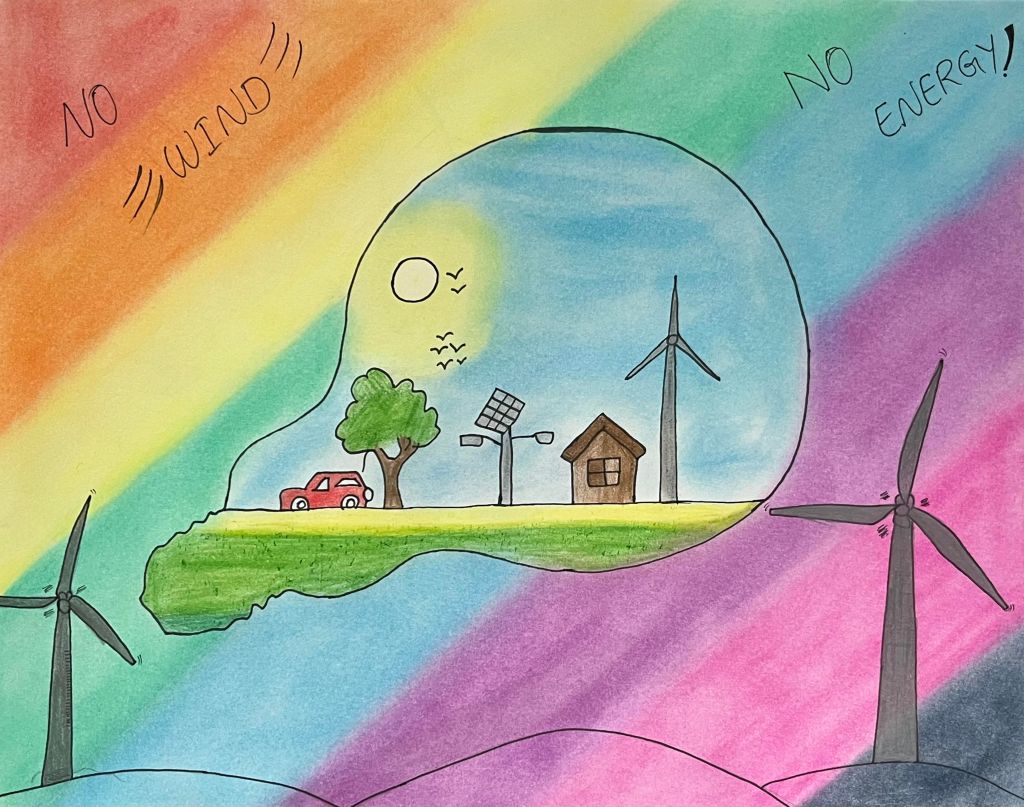
Another global problem is affordable and clean energy, especially electricity. There could be more windmills around the world, generating clean electricity without fuel, just like William’s.
I know that solving one big problem, climate change, with all these solutions can be costly. But the more we advocate, and the more people we bring to understand how serious this problem is and how it is affecting the world right now, the more we will be able to push governments and officials to increase funding for real solutions. We need to fight. As Greta Thunberg said, “We can no longer let the people in power decide what hope is. Hope is not passive. Hope is not blah blah blah. Hope is telling the truth. Hope is taking action.”
Hayley Xu is a STEM enthusiast from New York City who studies at Bard High School. She is president of her school’s Women in STEM club, a CUNY STEM researcher, a CAAAV member and a former RCC intern, and advocates on Asian-American issues, and the environment. In her free time, she plays piano, watches movies and writes her blog.

