By Daniel Reyes Canario, Dominican Republic
English translation of “Guardianes del Ozama”
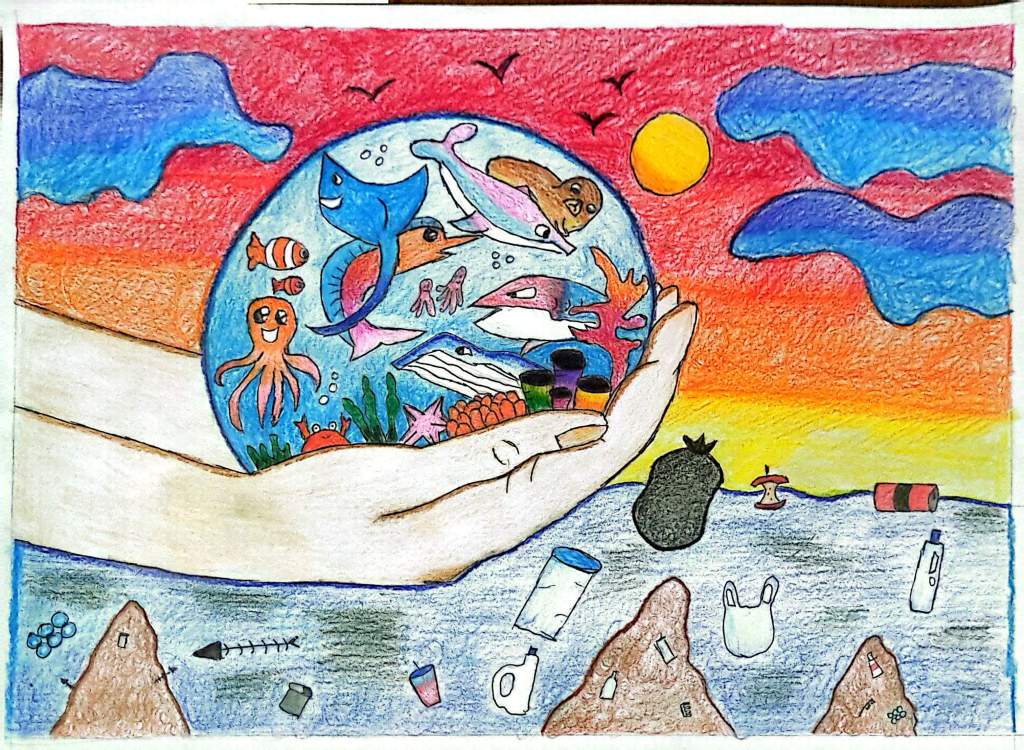
On the Ozama River, in the province of Santo Domingo in the Dominican Republic, rubbish was becoming part of the landscape. Every time a downpour fell, the gullies running through the neighbourhoods swept tonnes of plastic bottles, foam and bags into the riverbed. All of that rubbish ended up in the Caribbean Sea. Each time more of it arrived, the water turned a thick grey that suffocated the fish, and the neighbourhoods along the river too.
In the community of Las Lilas lived Mateo, a twelve-year-old boy who had grown up running around the gullies that carried tonnes of plastic and rubbish. Mateo went to a nearby school and loved maths and caring for nature. He spent his afternoons watching the water trickle between the waste, thinking only about how the pollution was devouring the river.
One day, while he was walking along the bank with his neighbour and best friend, Laura, they stopped to watch Don José, one of the oldest residents of the neighbourhood. Don José was a fisherman, and he was trying to start the engine of his small boat, which had jammed on an enormous plastic bag. He sighed with sadness and anger and set the oars aside. The fisherman’s frustration and the grey water were the spark. Mateo looked at Laura, and there was a silence; they both felt that they had to act now. Laura broke the silence:
“We’re not going to just stand here with our arms crossed. We have to stop the rubbish before it hurts the river any more.”
The next day, Mateo and Laura wasted no time. They called all the children of the neighbourhood, and Don José, to the riverbank. Mateo took out his maths notebook and showed them the design of his invention. Everyone was impressed. Laura, who was very creative, named the invention “Eco-Zama.” Mateo used drawings to explain how the system would work: a movable net and a floating wall made of recycled bottles. When he saw Mateo’s brilliant idea, Don José, excited, gave them some old fishing nets he had stored away.
With a clear plan and the nets in their hands, every afternoon after school the neighbourhood children went out looking for bottles: in their homes, in the streets and in the Ozama River itself. In the end they collected hundreds of plastic bottles to build the floating wall. Then they helped tie them together until they had built a barrier that crossed part of the river. With Don José’s fishing nets they made a system of ropes and tied the floating wall to the trees. Everything worked beautifully. When the wall filled up with rubbish, the children pulled the ropes, the net dragged all the rubbish to the bank, and after emptying it, they put it back in place. When they saw that the Eco-Zama worked perfectly, everyone was overjoyed, and they began to think about how to run a campaign so that people in nearby neighbourhoods would stop throwing rubbish into the river.
Laura gathered everyone together and shared her idea for involving all the communities:
“We need to get the whole neighbourhood to stop throwing rubbish into the streets and the gully. The best way to reach everyone is social media, and a competition where the people who help the most earn points.”
That was when, using her tablet, Laura designed an app called ReciclaRD.
Don José supported the children’s project and offered his backyard as the recycling centre and the workshop for building more floating walls to trap rubbish. On one wall of the yard they hung a big sign: Guardian Station.
The process was quick and easy. The children had it all organised. They put up posters in the busiest places in the neighbourhoods: corner shops, minimarkets, schools and parks. They got the best-known people in the community involved: street vendors, fruit sellers, shopkeepers, teachers, couriers and delivery riders.
Soon everyone was talking about the Eco-Zama project, and information about how to take part spread through ReciclaRD. The poster said:
Neighbour, bring your bag of plastic bottles, earn points and become a Guardian of the Ozama River!
FOLLOW THE STEPS
- Bring your bag of plastic waste to the Guardian Station.
- Put your bag on the scale and write down the weight.
- Receive your card with the points you have earned.
- Follow the ReciclaRD account.
- If you don’t have an account, we’ll create one for you.
- Collect 1,000 points and become a Guardian of the Ozama.
Every neighbour could see how many points they had on Laura’s app, and once they reached 1,000 points or more, they could exchange them at the corner shops and minimarkets that supported the project.
“You can go and exchange your points at the shops sponsoring the project!” Laura would say excitedly, as more and more neighbours came to the Guardian Station with big bags full of plastic bottles and other waste that could be recycled.
ReciclaRD became big news in the Dominican Republic. The river looked cleaner and cleaner, and you could see the fish swimming freely. The neighbourhood had become a model for others. The news spread so fast that it reached the directors of an important technology company. Impressed by the two children’s intelligence, the director and the company’s engineers visited the neighbourhood to see the inventions. When they arrived, they were fascinated by the plastic wall and the movable net, but they noticed that the children had to pull the net by hand with the rope system.
“Your idea is impressive, but we can make it even better,” said one of the engineers.
“I really like this idea, and we can improve it so that it works even better,” said the company director, who was taking notes on his tablet about everything he saw. “Mateo, we know this was your idea, but if you allow us, we can use advanced technology to automate the Eco-Zama. We can install smart sensors that detect when the wall is full of rubbish, move the net automatically to the containers, and then sort the waste. We can also improve the quality of the net and make the wall out of a stronger material.”
They sealed the agreement with a big group hug. Don José signed all the agreements together with the company’s representatives. Within a few weeks, everything they had agreed was under way. When the first prototype succeeded, they began installing them in other rivers with similar problems. They also opened new Guardian Stations and updated the ReciclaRD app so that it worked across the whole country.
Mateo and Laura looked out over the Ozama River in the sunshine, proud, knowing that a net, some plastic bottles, a tablet and the idea of two children had changed the neighbourhood and the river forever. They had also helped people understand that the best thing is not to throw rubbish into the river at all, but to recycle, or to choose paper or cardboard products, which pollute less.
They learned that age does not matter when it comes to standing up for ideas that make life better for everyone. They were no longer just two ordinary kids; they had become a legend. They were the founders of the Guardians of the Ozama.
Daniel Ernesto Reyes Canario is a student from Santo Domingo, Dominican Republic, who currently attends Colegio Triumphare. He has a strong interest in mathematics and social studies, especially world history and the history of the World Wars. He also enjoys learning and memorizing the flags of countries around the world.
Music is another one of Daniel’s passions, and he enjoys playing the piano. One of his proudest accomplishments was performing as a pianist in a musical orchestra, an experience that inspired him to continue developing his musical skills. When he isn’t studying or playing music, Daniel enjoys spending his free time playing video games with his friends.
Daniel is curious, enthusiastic about learning, and excited to continue growing both academically and musically.

